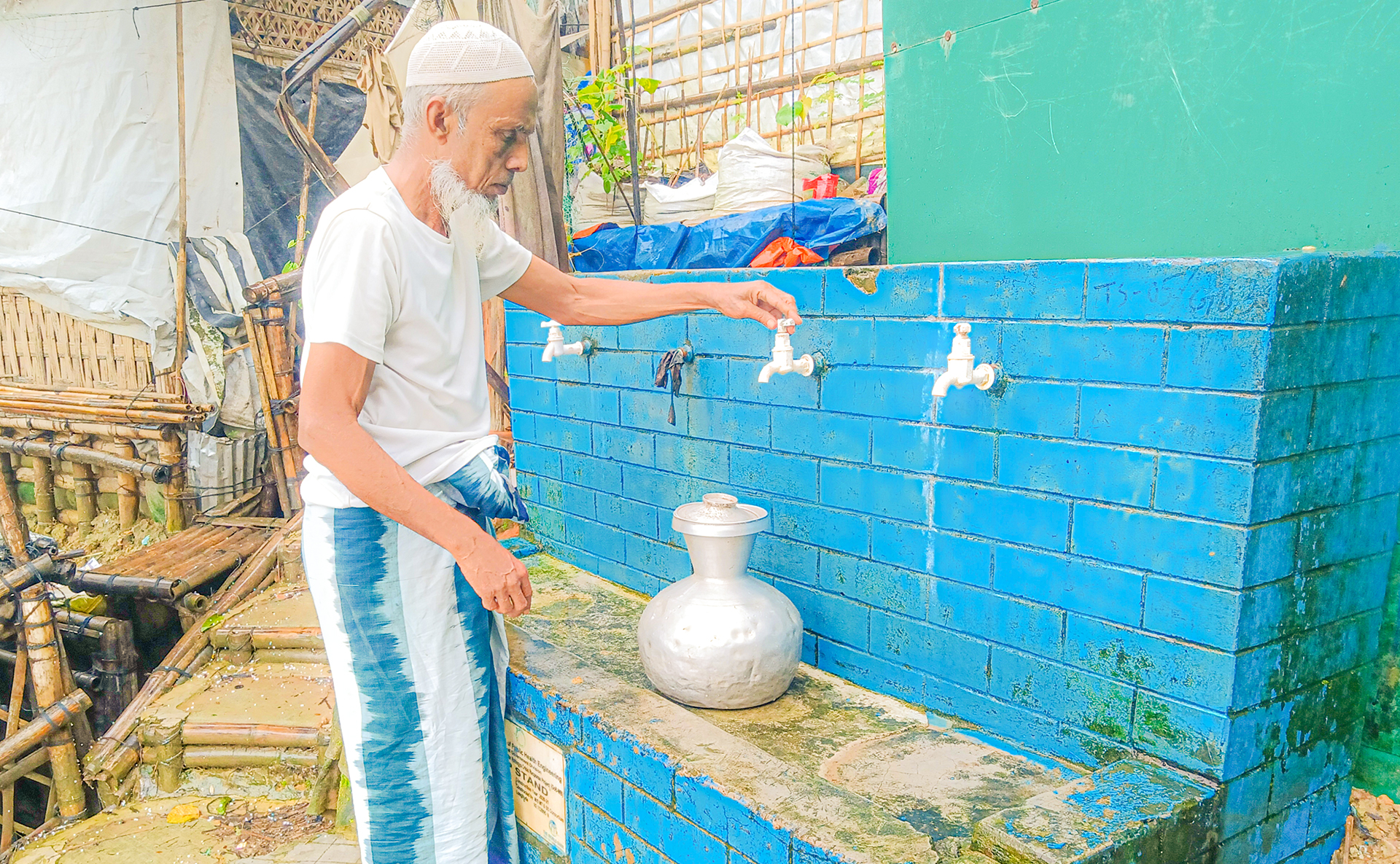







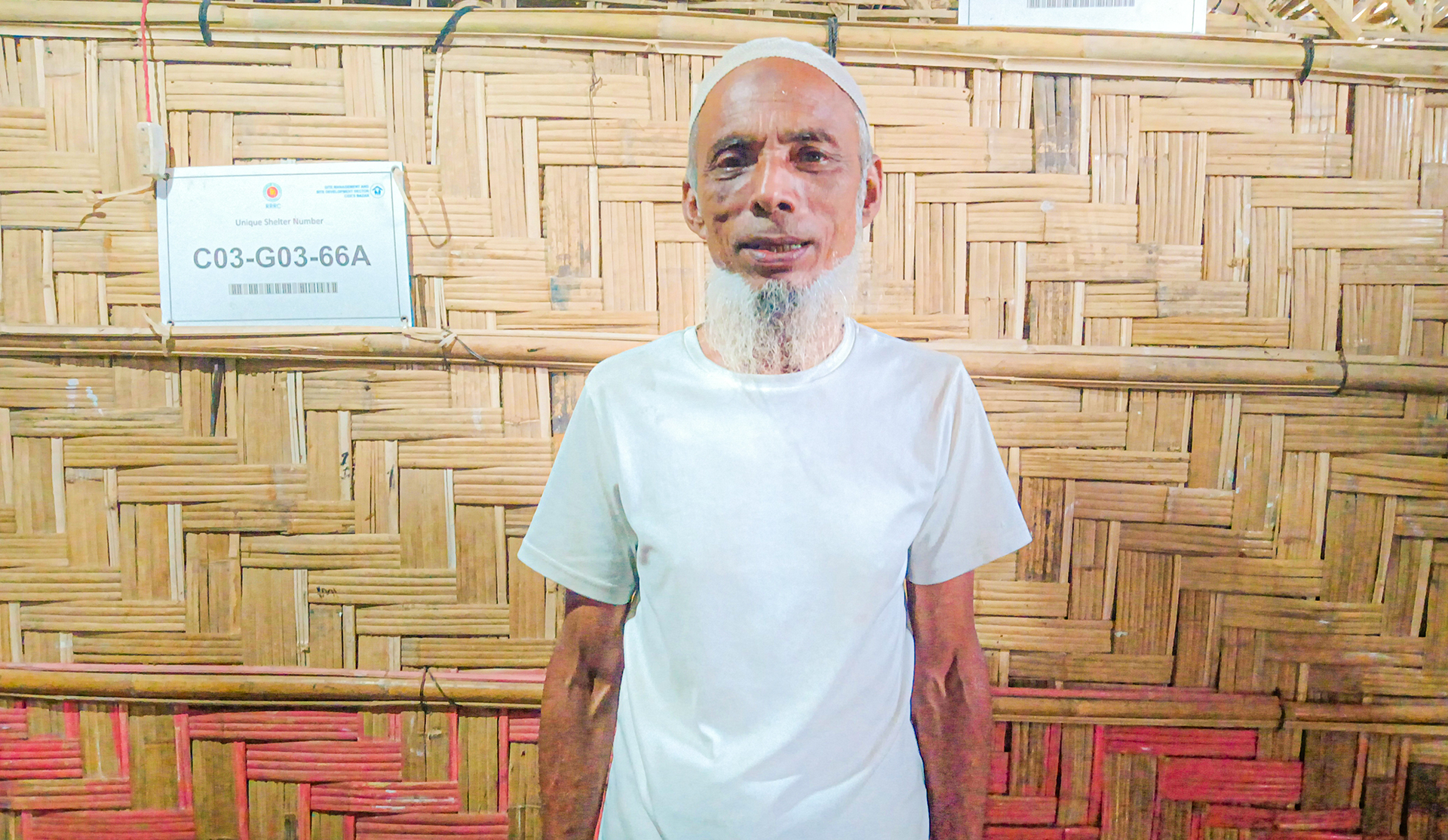
Abdul Hasim, a 60-year-old man, resides in Camp-3 Block G03 66 with his wife Jahura Katun, aged 55, and their two children. Their son, Mohammed Riyaz, a diligent 17-year-old, attends Madrasha for his studies, while their daughter Rashida age 14year takes on responsibilities at home. The family’s life was upended when they were forced to flee Myanmar in August 2017, escaping the horrors of torture and persecution.
Upon arriving at the refugee camp, Mr. Hasim recalls the overwhelming challenges they faced, particularly in the areas of sanitation and hygiene. “When we first got here, maintaining proper hygiene was a constant struggle,” Mr. Hasim shares. “We relied on the efforts of various organizations like NGO Forum, Oxfam, and BRAC. Although their help was valuable, we still faced difficulties, especially with waste management and access to clean water.”
The situation began to improve when Prottyashi, an organization dedicated to enhancing WASH activities, took over Camp-3 Block G03 66. “The difference has been remarkable,” Mr. Hasim says with a smile. “PROTTYASHI’s WASH program is far superior to what we experienced before. Their volunteer team goes door-to-door, collecting waste from every household, ensuring that the environment remains clean and sanitary.”
Mr. Hasim explains how waste management was a significant challenge before PROTTYASHI’s involvement. Previously, waste was collected from communal bins, but this approach was insufficient as not all households consistently used the bins. Many residents would dispose of their garbage improperly, leading to unsanitary conditions. “Now, with PROTTYASHI’s door-to-door waste collection, our surroundings are much cleaner, and there’s a sense of order,” Mr. Hasim notes.
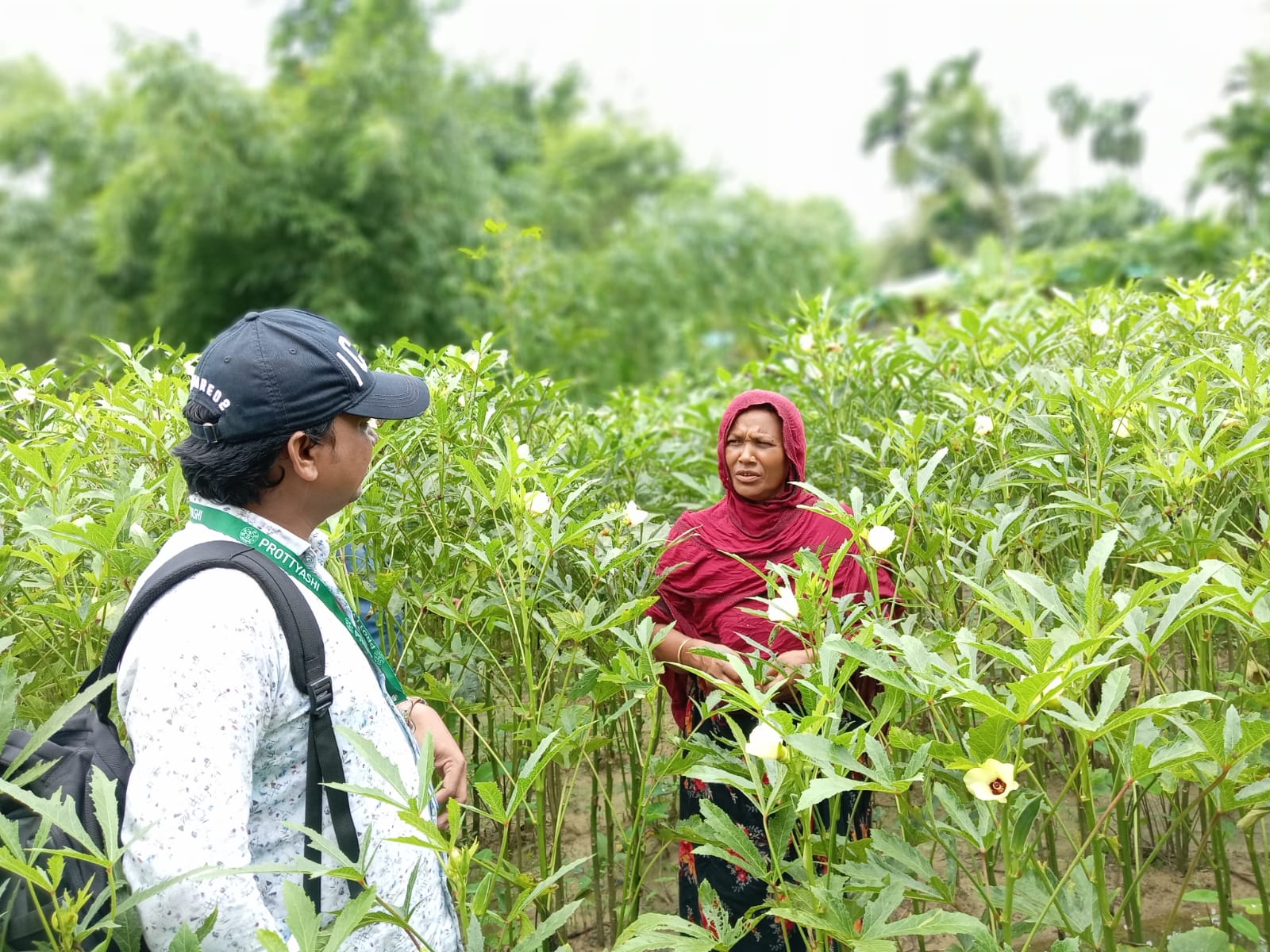
In addition to waste management, PROTTYASHI’s WASH volunteers provide vital hygiene education to the community. They conduct sessions on a range of topics, including male engagement, dengue prevention, menstrual hygiene management (MHM), acute watery diarrhea (AWD) awareness, and community feedback consultation meetings (CFCM). These sessions have had a profound impact on the community. “We’ve become more aware and cautious about our health and environment,” says Mr. Hasim. “The knowledge we’ve gained has helped us prevent diseases and maintain better hygiene.”
PROTTYASHI’s commitment extends beyond education and waste management. The organization also ensures that critical facilities like latrines (LT), bathing cubicles (BC), deep tube wells (DTW), and tap stands are properly maintained. “Whenever there’s a need for repairs, Prottyashi acts quickly,” Mr. Hasim explains. “This prompt response ensures that we always have access to clean water and functional sanitation facilities, which are essential for our well-being.”
For Abdul Hasim and his family, the improvements brought about by PROTTYASHI’s WASH activities have been transformative. “Our lives have improved so much,” Mr. Hasim says, reflecting on the positive changes. “We feel safer, healthier, and more hopeful for the future. Prottyashi has brought a sense of dignity and comfort to our lives that we didn’t have before.”
This success story is a powerful testament to the impact that dedicated WASH programs can have on the lives of refugees. Through PROTTYASHI’s efforts, families like Abdul Hasim’s have been able to rebuild their lives with greater security and dignity, ensuring a brighter and healthier future.