







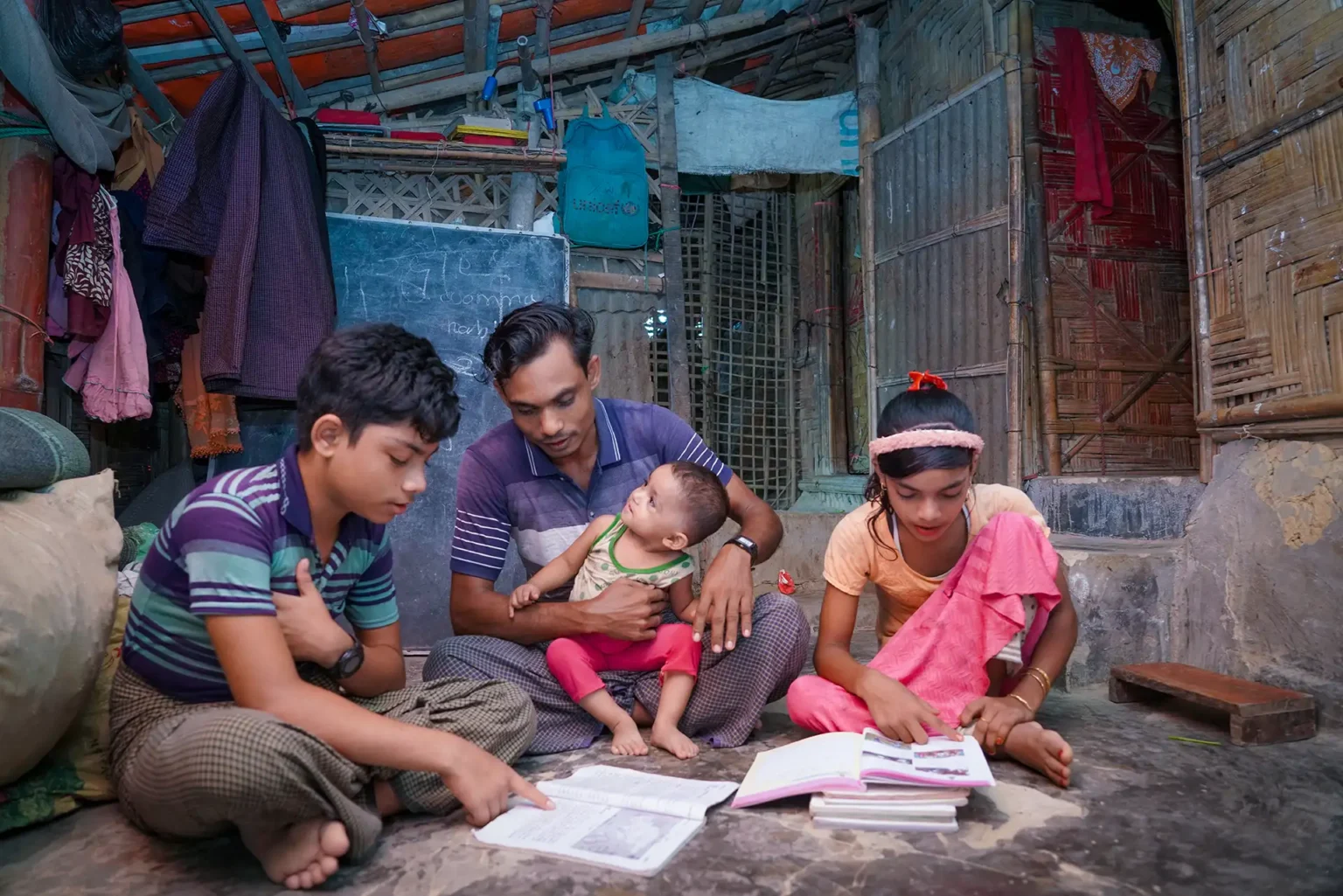
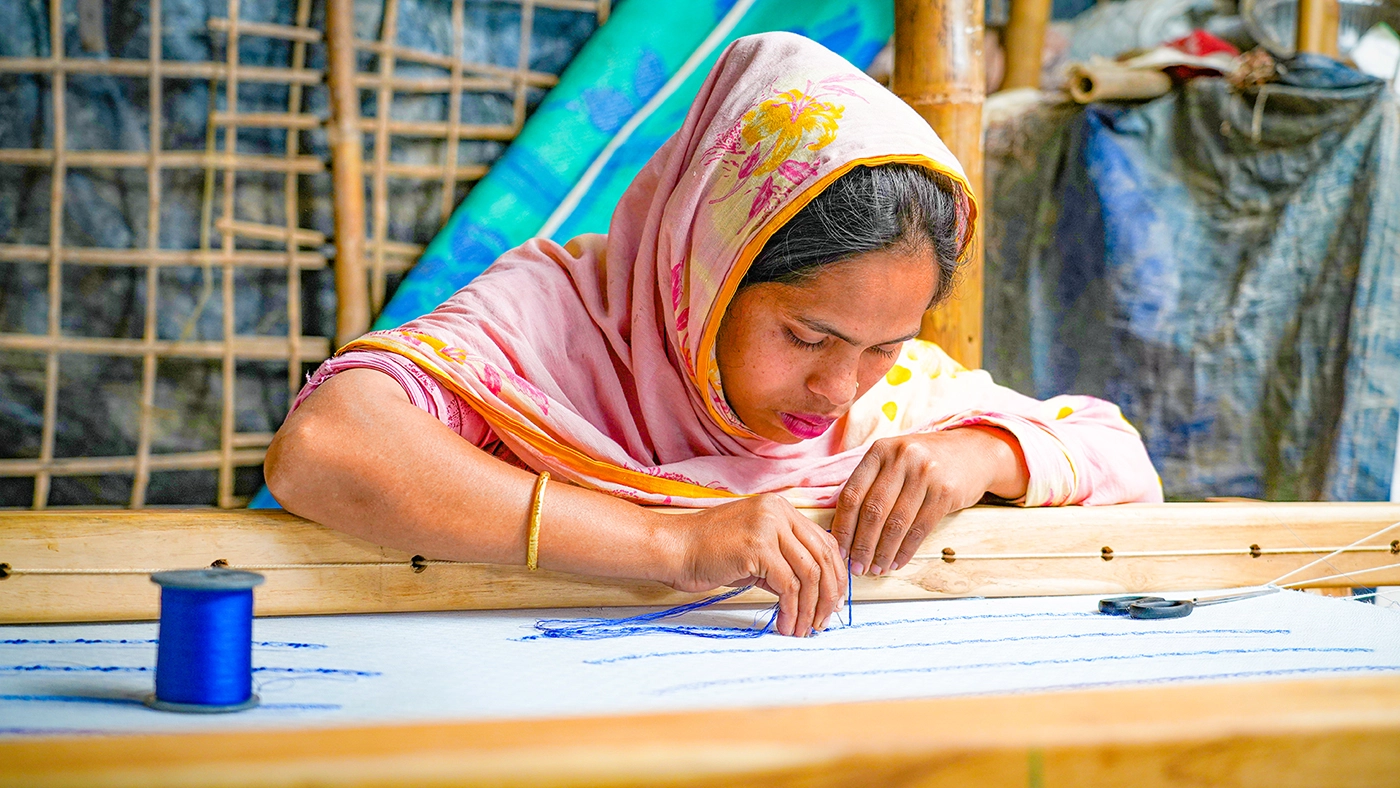
Asma, a Rohingya woman currently residing in Cluster 48, G-15 Block of Camp 23 in Bhasan Char, has been living in Bangladesh for the past 30 years. She moved to Bhasan Char 3 years ago along with her husband, Hamid Ullah, and their three children—two sons and a daughter, aged 9, 7, and 5—who now attend school regularly.
Life in the camp presents many daily struggles, including limited access to jobs and basic resources. Asma’s husband occasionally goes to sea for fishing but has no regular employment. This has made it difficult for the family to meet their daily needs beyond the ration support they receive. In such conditions, the opportunity to gain skills and earn an income becomes a turning point for families like Asma’s.
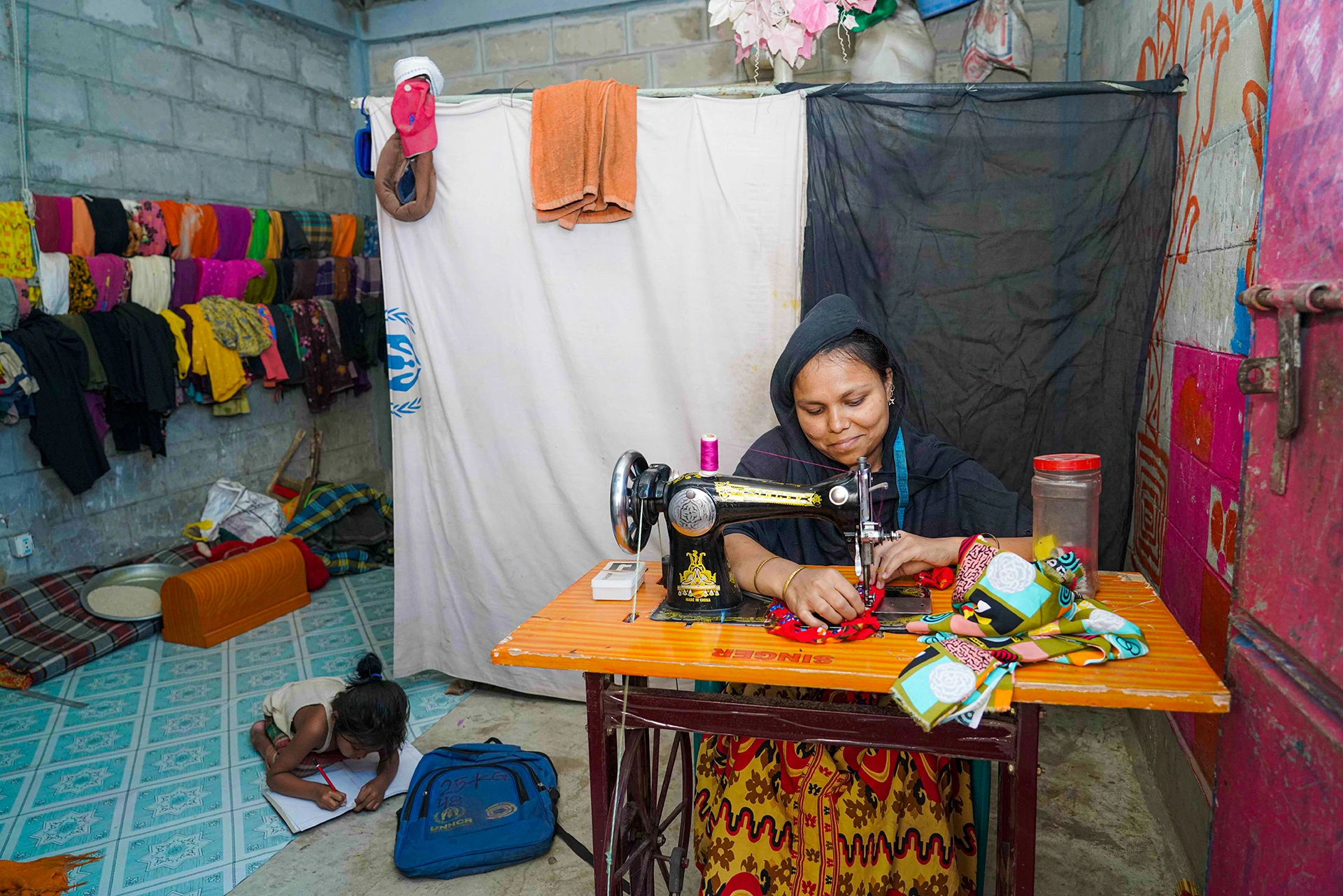
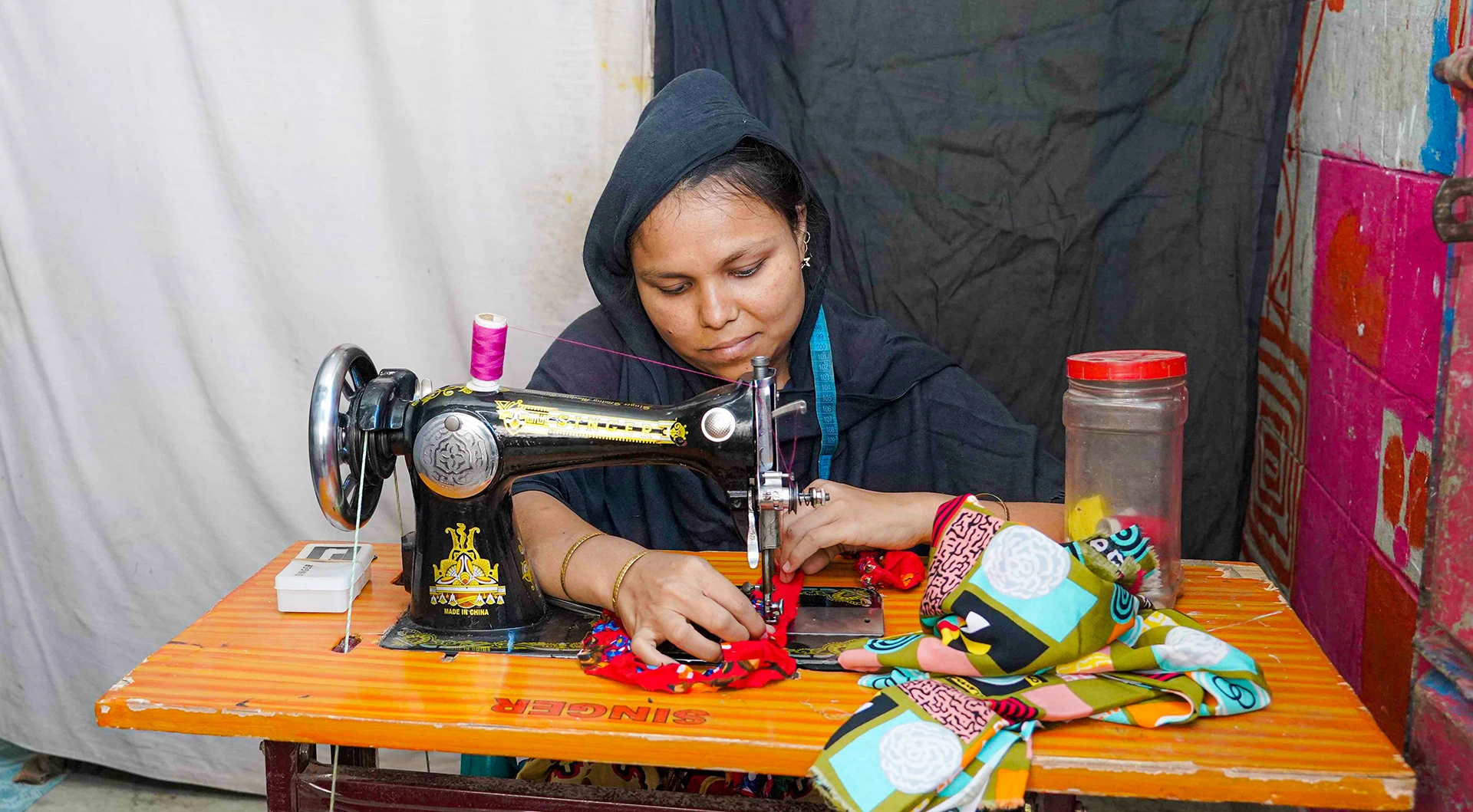
Asma enrolled in a 72-day non-formal sewing training organized by PROTTYASHI. The training introduced her to sewing machine operations, various stitching techniques—such as straight, round, gather, folding, lock, chain, zigzag, running, back, overlock, and satin stitches—as well as lessons on fabric measurement, dress specifications, and color matching. This helped her understand the importance of cloth quality and color harmony in creating attractive garments. Upon completing the training, Asma received a sewing machine as input support. In just 16 days, she earned BDT 600 by sewing clothes for neighbors—her first independent income in years. This small beginning brought renewed hope and dignity into her life.
Before coming to Bhasan Char, Asma had never had access to work opportunities. Now, she is known in her neighborhood for her sewing skills and is eager to share her knowledge with others—especially young girls—without expecting anything in return. She hopes to teach her daughter sewing skills as she grows up, empowering her with the same confidence and opportunity. Asma now dreams of expanding her skills to learn men’s clothing and increasing her income. Looking ahead, she wishes to take her sewing skills back to Myanmar when repatriation becomes possible. Her vision is to become self-reliant and contribute to her family and community through the skills she has acquired.
Asma’s story is a testament to how skill-building and livelihood support can restore dignity, promote self-reliance, and sow seeds of hope for a better future.