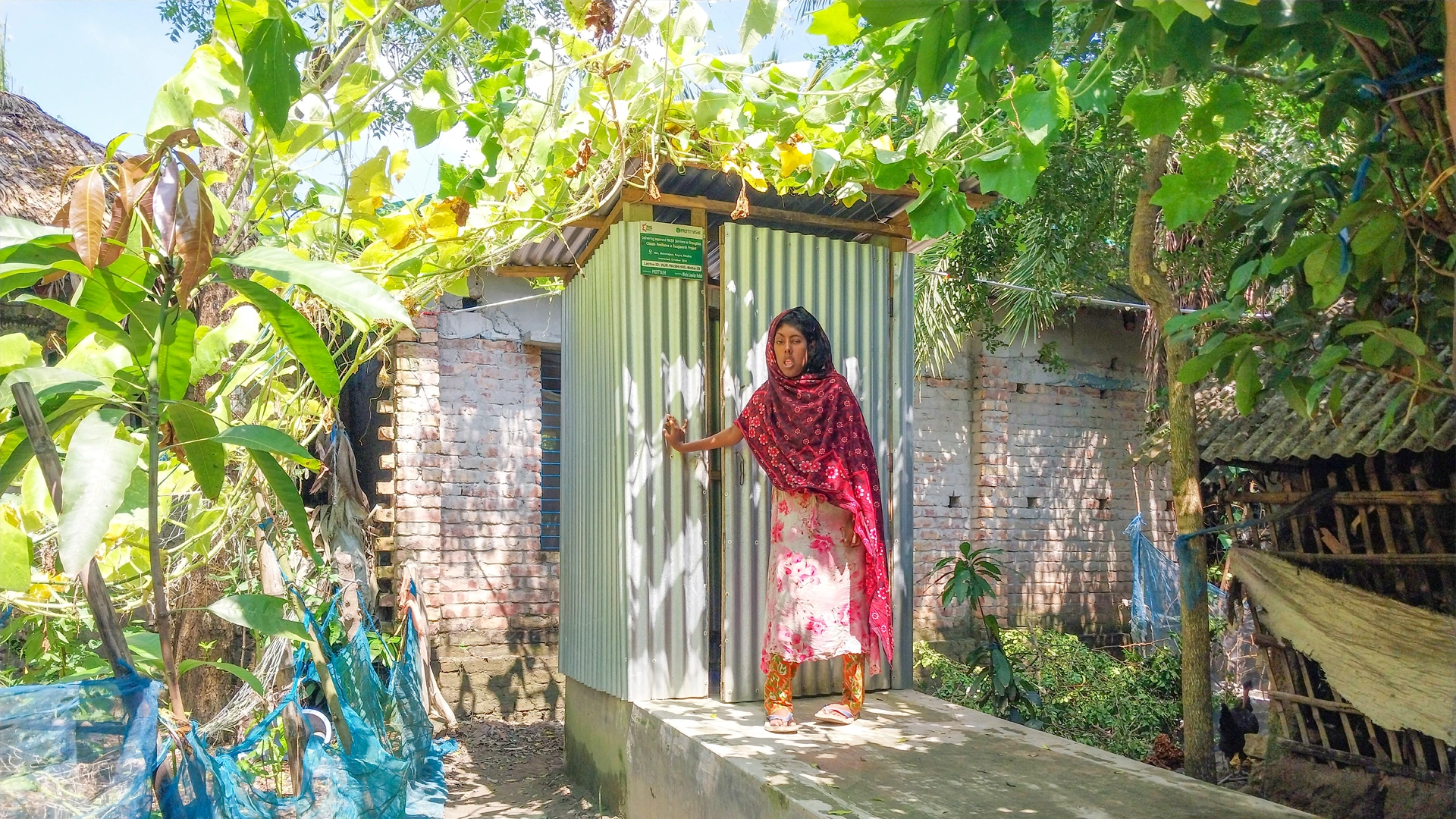








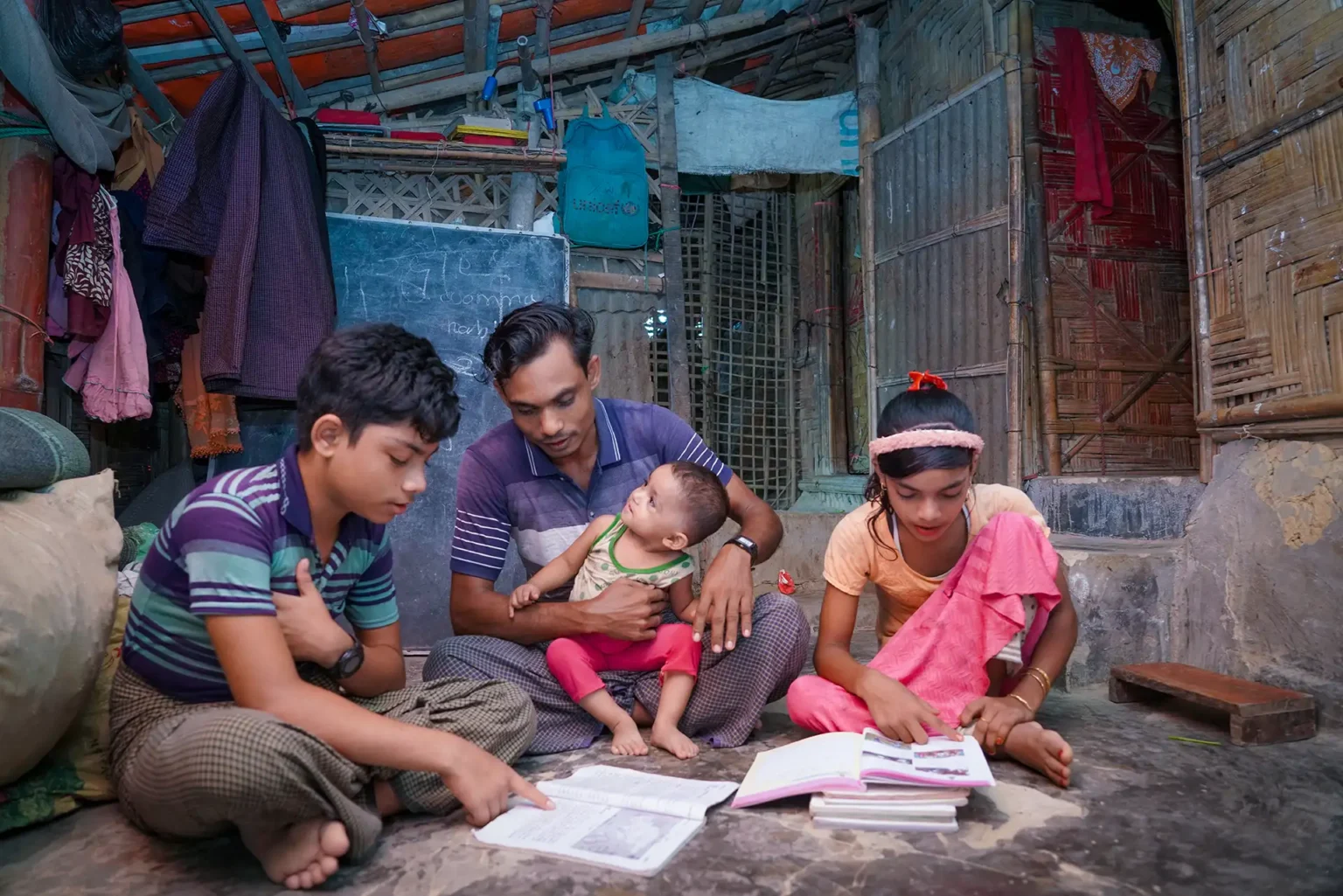
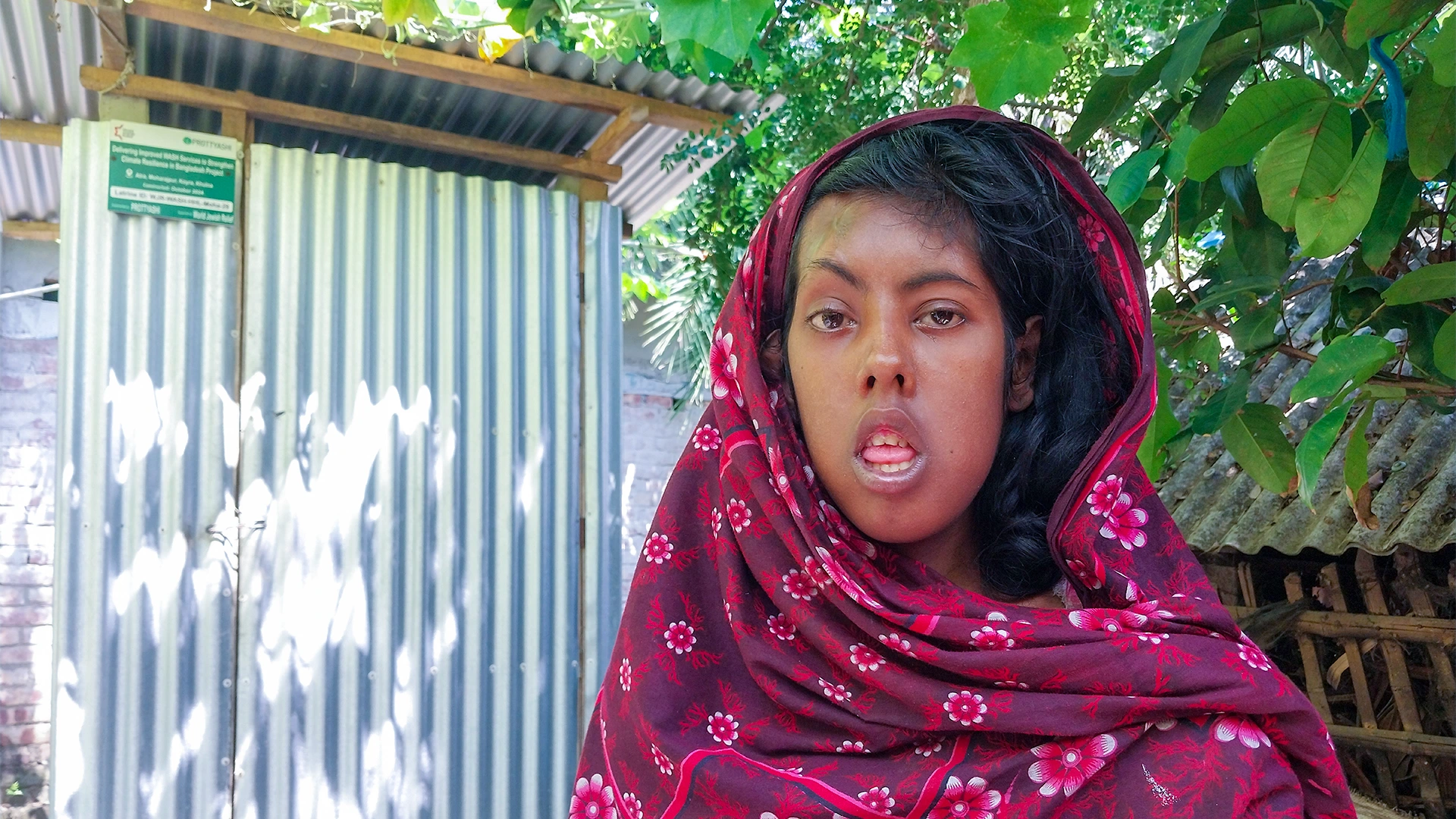
Sumaiya Akhtar (17) is a disabled girl from a poor family. She is a student. Sumaiya’s parents, siblings (younger brother Din (14) and younger sister Sumi Akhter (8)) and grandmother (60) live together in the same family. Sumaya’s family needed a lot of money for her treatment. Her father, Salim Moral, is a 47-year-old daily labourer. Sumaiya’s father worked as a daily wage worker to support his family and children’s education. Sumaiya’s father used to go to the city to earn a little more. After earning for some days, Sumaiya’s father’s leg was broken in an accident. Despite spending a lot of money on treatment, the condition of his leg did not get better. Sumaiya’s father can now earn only two thousand taka a month. Sumaiya’s mother, Asma Khatun, who is 32 years old, works as a daily wage worker whenever she gets any opportunity to meet all the expenses of the family.
Sumaiya knew nothing about menstrual hygiene management. At age 14, when she had her first period, her mother let her use old, discarded, dirty clothes which were not even dried in the sun, and this was the way her mother had been maintaining menstrual health. When her period used to start, she felt abdominal pain and back pain. But Sumaiya’s mother did not take her to any doctor. Her grandmother also used to say that it happens when there is menstruation. There is no need to go to the doctor for this. Besides, they also used to say, “You can’t go to anyone’s house; you can’t go to school during menstruation.” Sumaiya’s mother also uses old clothes and does not let them dry in the sun. Fish, meat, eggs, and milk – these nutritious foods were not allowed to be eaten during menstruation. As a result, their health continued to deteriorate, resulting in the disabled condition of Sumaiya and her suffering from malnutrition.
Sumaiya received two sessions on menstrual hygiene management through the WJR WASH project. From this session Sumaiya learnt about menstrual health management, including instructions to follow during menstruation. Sumaiya no longer uses old dirty clothes in place of sanitary pads. She has started to use sanitary pads during menstruation. Sometimes, if sanitary pads are not available, clean clothes are used, which are dried in the sun. Sumaiya now eats nutritious food and goes to school during menstruation. Sumaiya now understands very well that menstruation is not a hindrance; it is a natural and normal event that should be treated with certain preparedness.
Sumaiya said, “Earlier I didn’t know what a napkin was; I used to feel shy when I was on my period and wouldn’t tell anyone.” Now I share with my mother. Mom buys sanitary pads; I now know how to use pads. Through the sessions of the WJR WASH project, I got to know details about menstrual hygiene practices, which no one discussed openly before. I learnt not only about menstruation but also about climate, about child marriage, and about sexual health. I am trying to make others aware. Lastly, I wish success for the WJR WASH project. If such a project is going on, the lives of many girls like me will change.