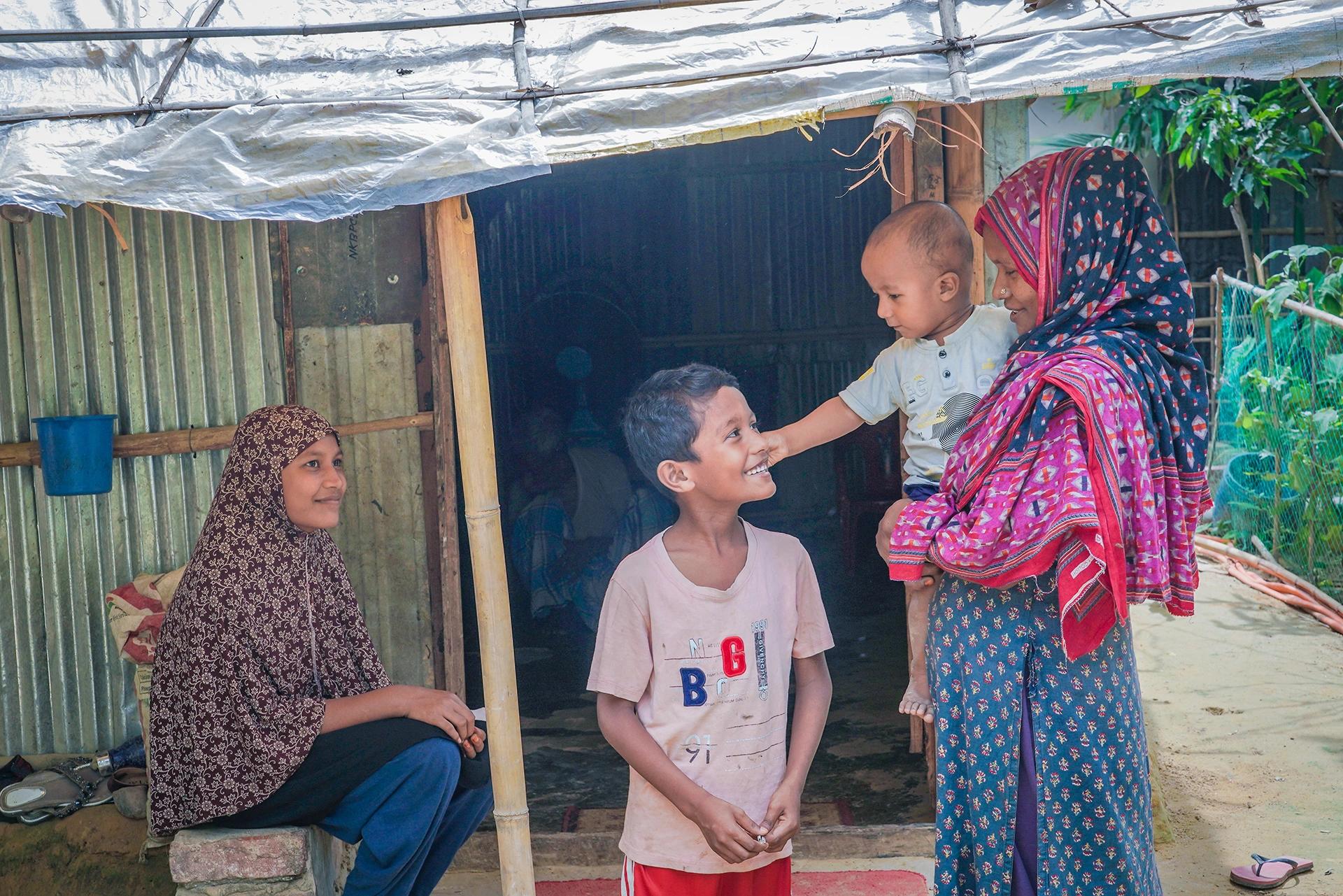








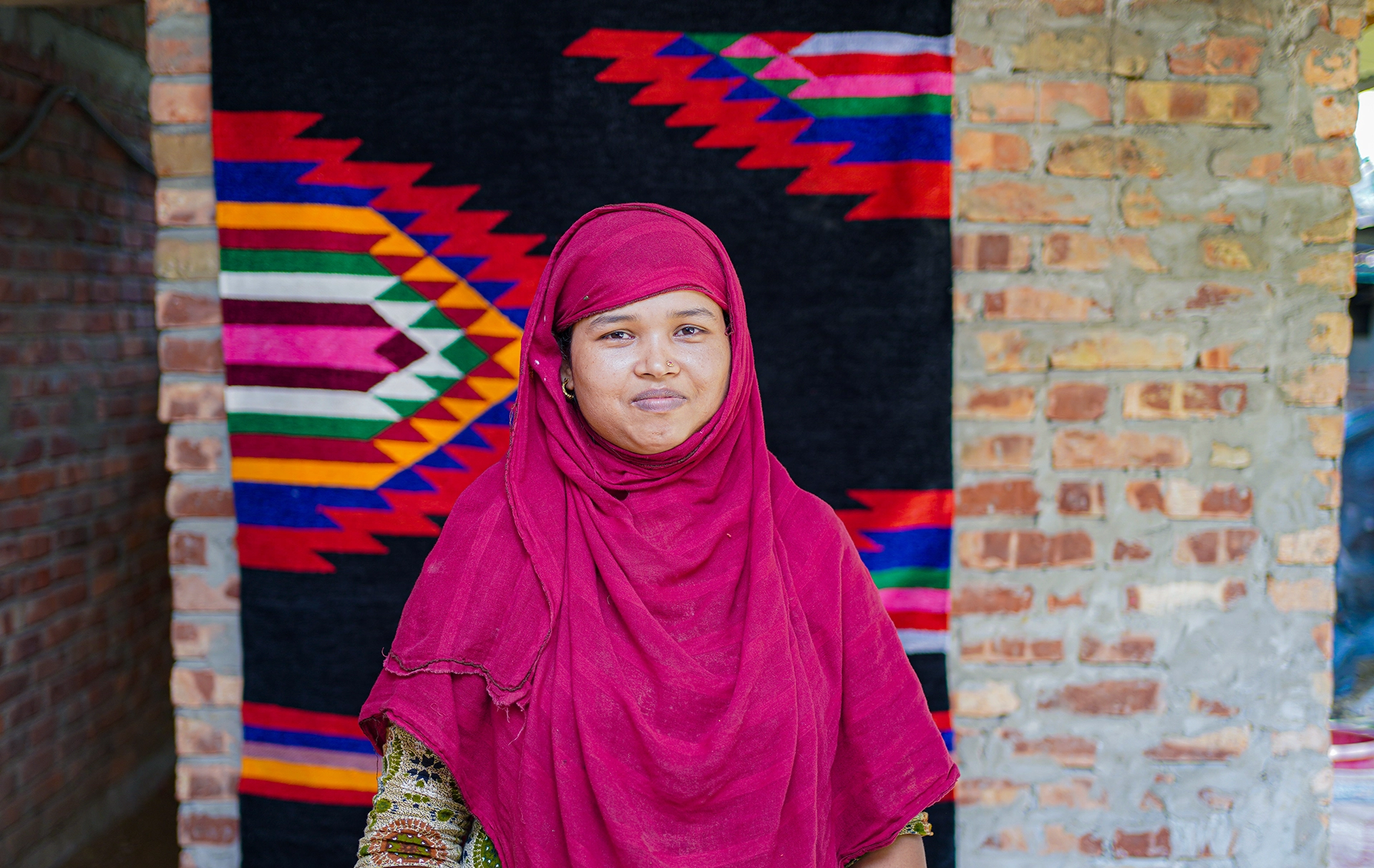
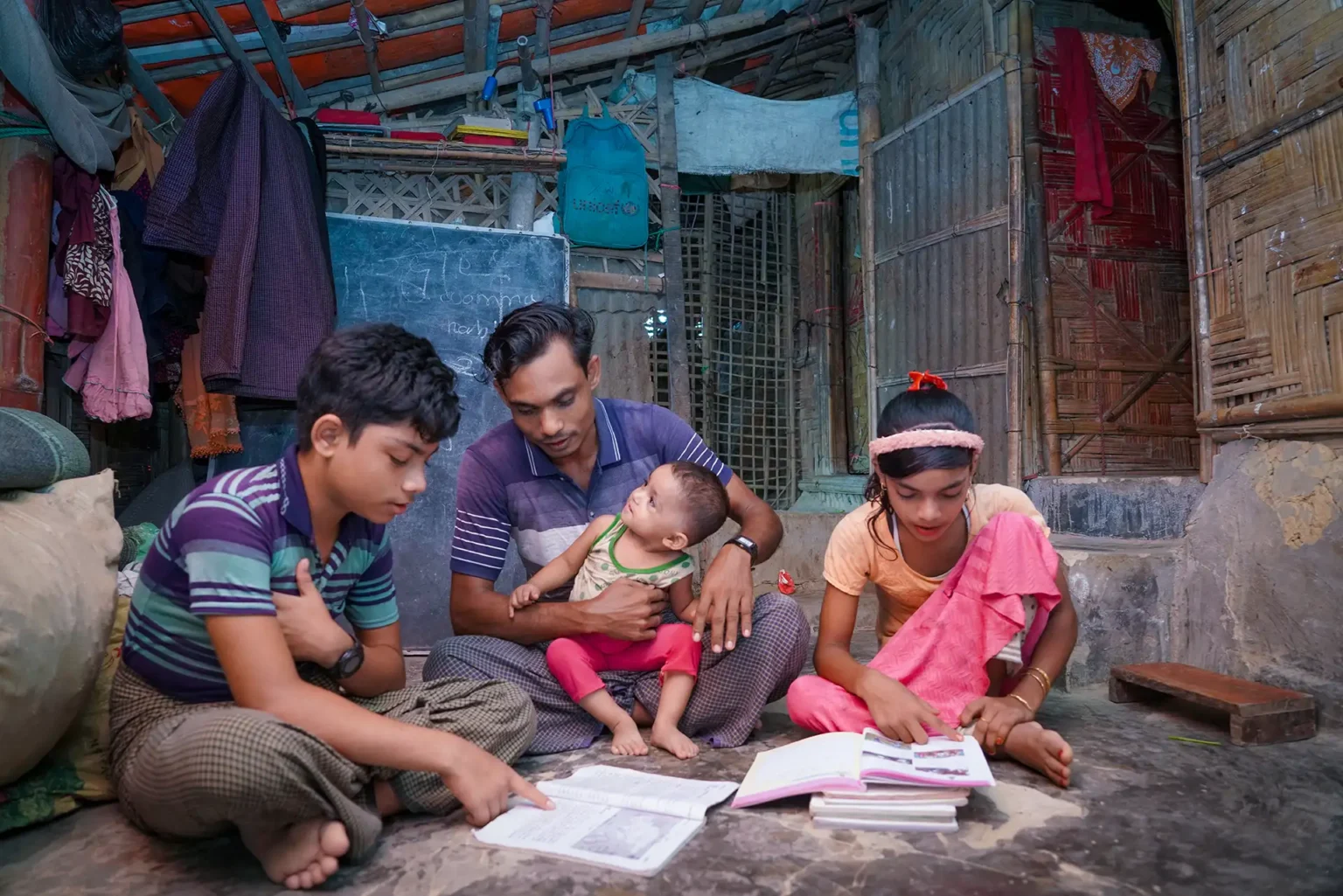
Rujina Akter, a 31-year-old mother of five, lives with her husband, Azim Uddin, a carpenter, in a modest two-room earthen house with a tin roof. Despite their limited income, Rujina always dreamed of improving her family’s nutrition and financial stability. For years, the family struggled with poverty and food insecurity. Azim’s earnings were barely enough to meet daily needs, let alone ensure nutritious meals for their children — Mahiya (14), Jamila (12), Afifa (10), Omar (7), and Anaf (2). “We used to depend entirely on the market,” Rujina recalled. “Sometimes we had to skip vegetables for days because we couldn’t afford them.”
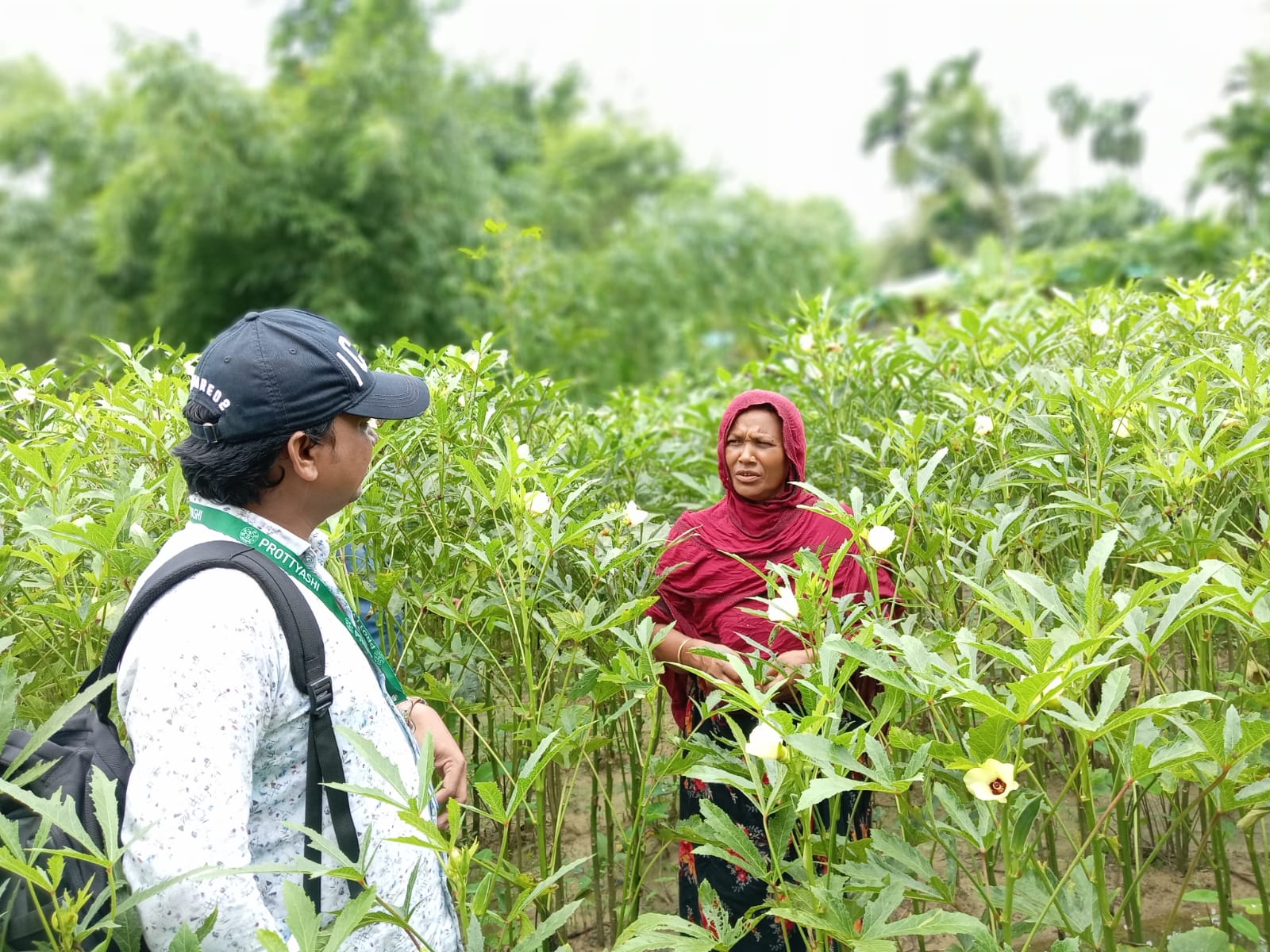
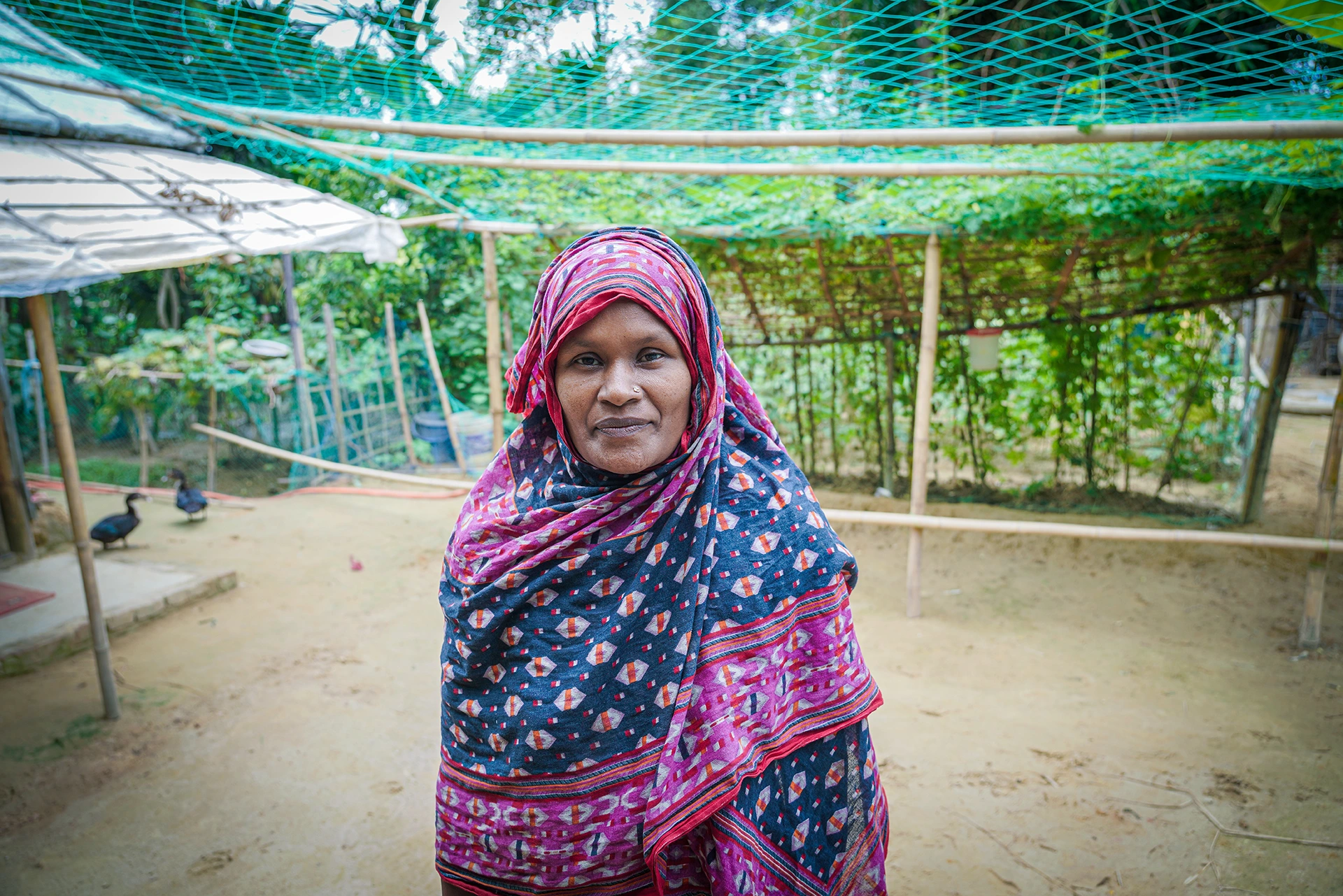
Her life began to change when she joined the Unity in Action Project, implemented by PROTTYASHI with support from OXFAM. Through the project’s Climate-Smart Kitchen Gardening training, she learned about sustainable cultivation techniques such as pit composting, organic fertilizer production, and climate-resilient gardening. She also received seeds, tools, and technical guidance to start her own home garden. With determination and care, Rujina turned a small patch of land beside her house into a thriving kitchen garden. By 28 August 2025, she harvested her first seven kilograms of ridge gourd, earning income from local sales while ensuring her family had access to fresh vegetables.
“We used to depend entirely on the market, Rujina recalled. ‘’Sometimes we had to skip vegetable for days because we couldn’t afford them.’’ – Rujina
Using household waste, Rujina began producing organic compost, improving soil fertility and reducing her dependence on chemical fertilizers. This not only made her garden more sustainable but also contributed to a cleaner environment. Inspired by her initial success, she now plans to expand her garden by cultivating more vegetable varieties and planting papaya trees to ensure year-round produce.
Today, Rujina is seen as an inspiration in her community—a woman who turned challenges into opportunities through her hard work and newly acquired knowledge. Her story reflects how climate-smart practices and community support can empower women to build resilience, improve livelihoods, and nurture hope for a better future.