







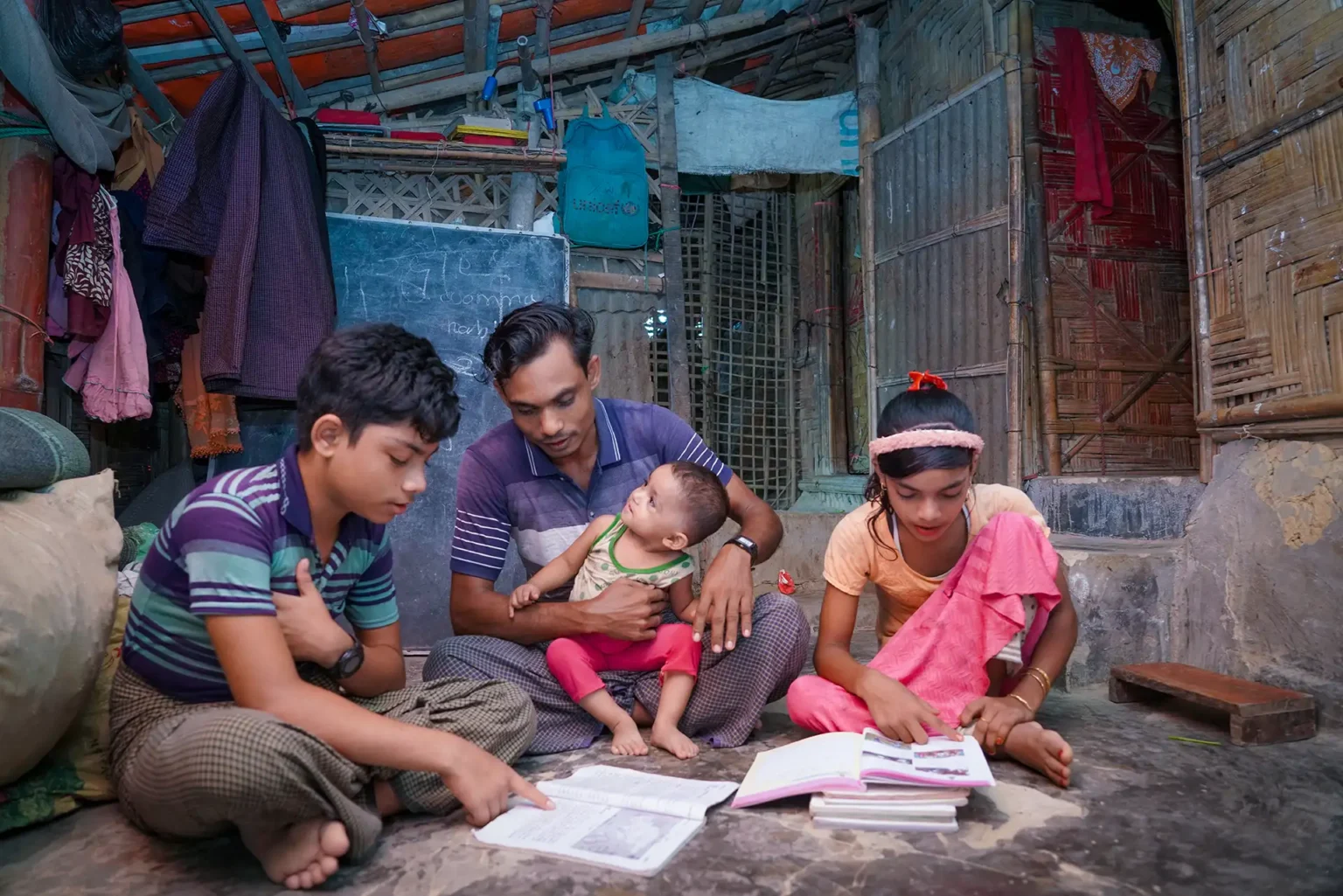
Shamsun Nahar, a resilient Rohingya woman, lives in Cluster 57, B-6,7 Block of Camp 20 in Bhasan Char with her 3 sons. She has been in Bangladesh for the past 15 years and relocated to Bhasan Char 3 years ago as part of the government’s relocation initiative. She is the head of her household, as her husband suffers from mental illness and is unable to work. Her sons, aged 12, 9, and 2, attend religious and formal schools.
Life as a displaced woman and family head in a refugee camp comes with daily challenges—navigating uncertain futures, dealing with bureaucratic complexities, and surviving without stable support. Before joining any training, Shamsun had never received support or learning opportunities from NGOs, although she always had the desire to gain skills and contribute to her family’s well-being.
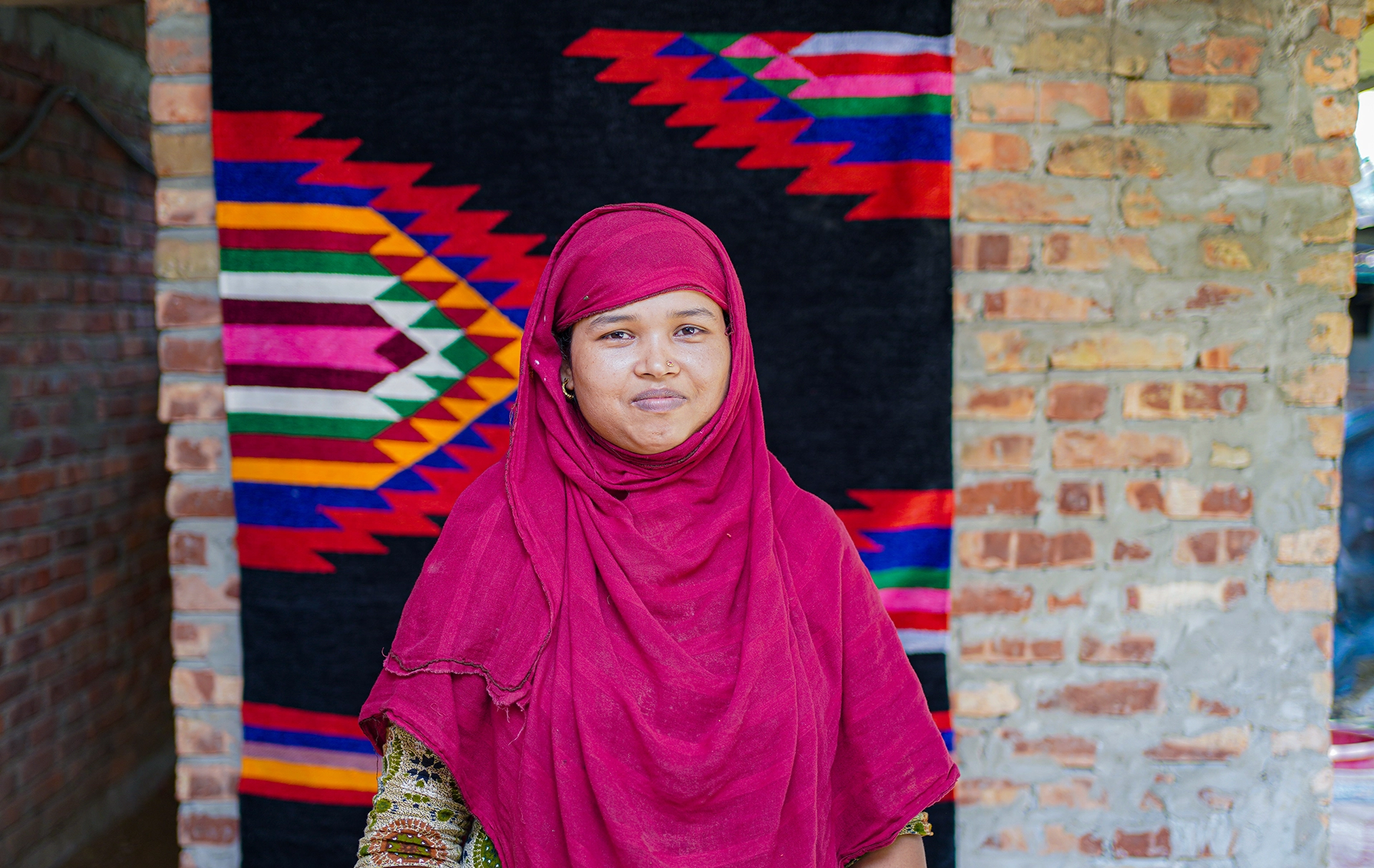
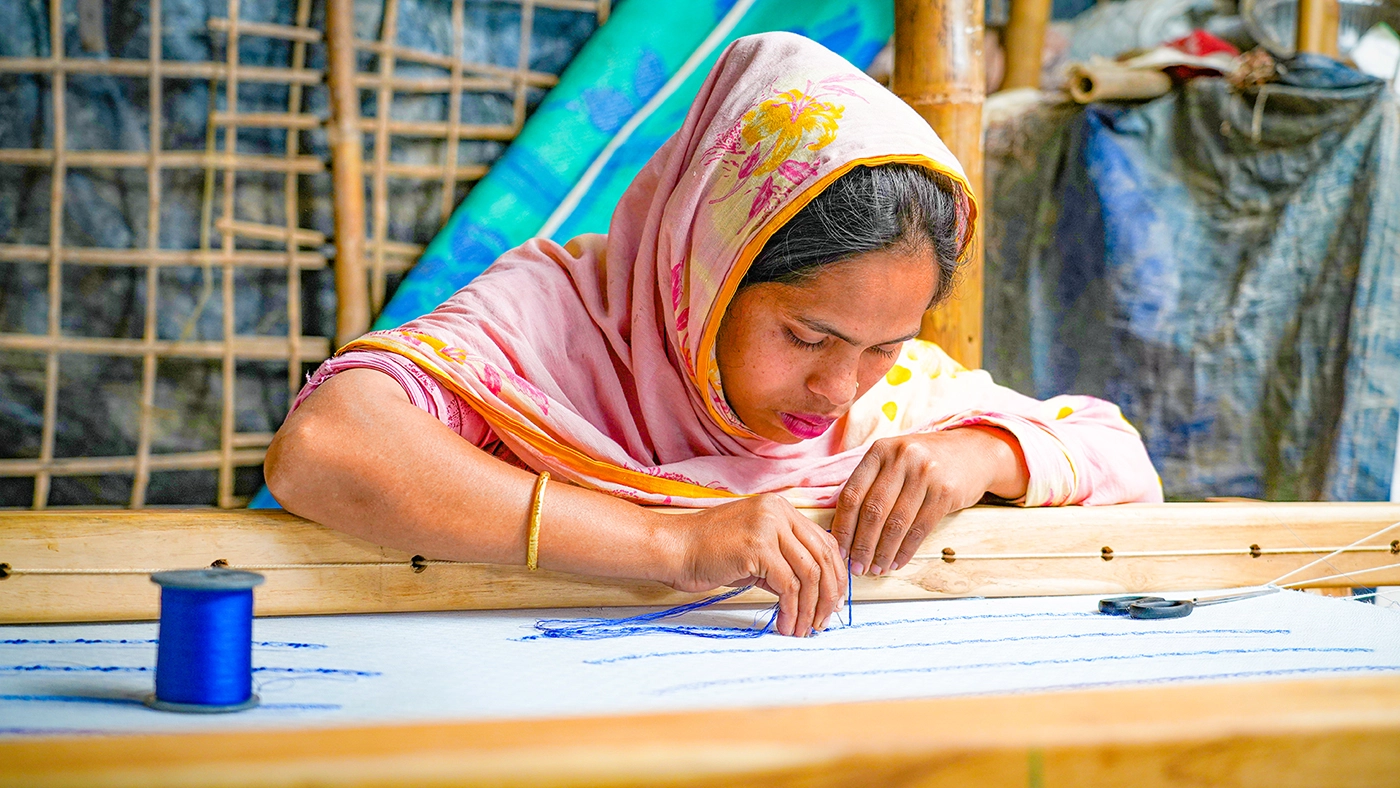
That opportunity came when she joined PROTTYASHI’s 30-day Shotoronji (traditional rug) weaving training. Through the training, Shamsun learned how to install wooden weaving machines, set up warp threads, design patterns, and practice various weaving techniques. She also gained knowledge in color selection and harmony—crucial for making beautifully crafted and marketable products.
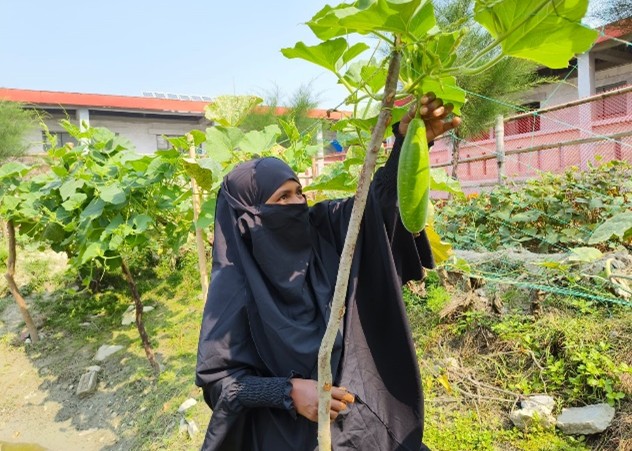
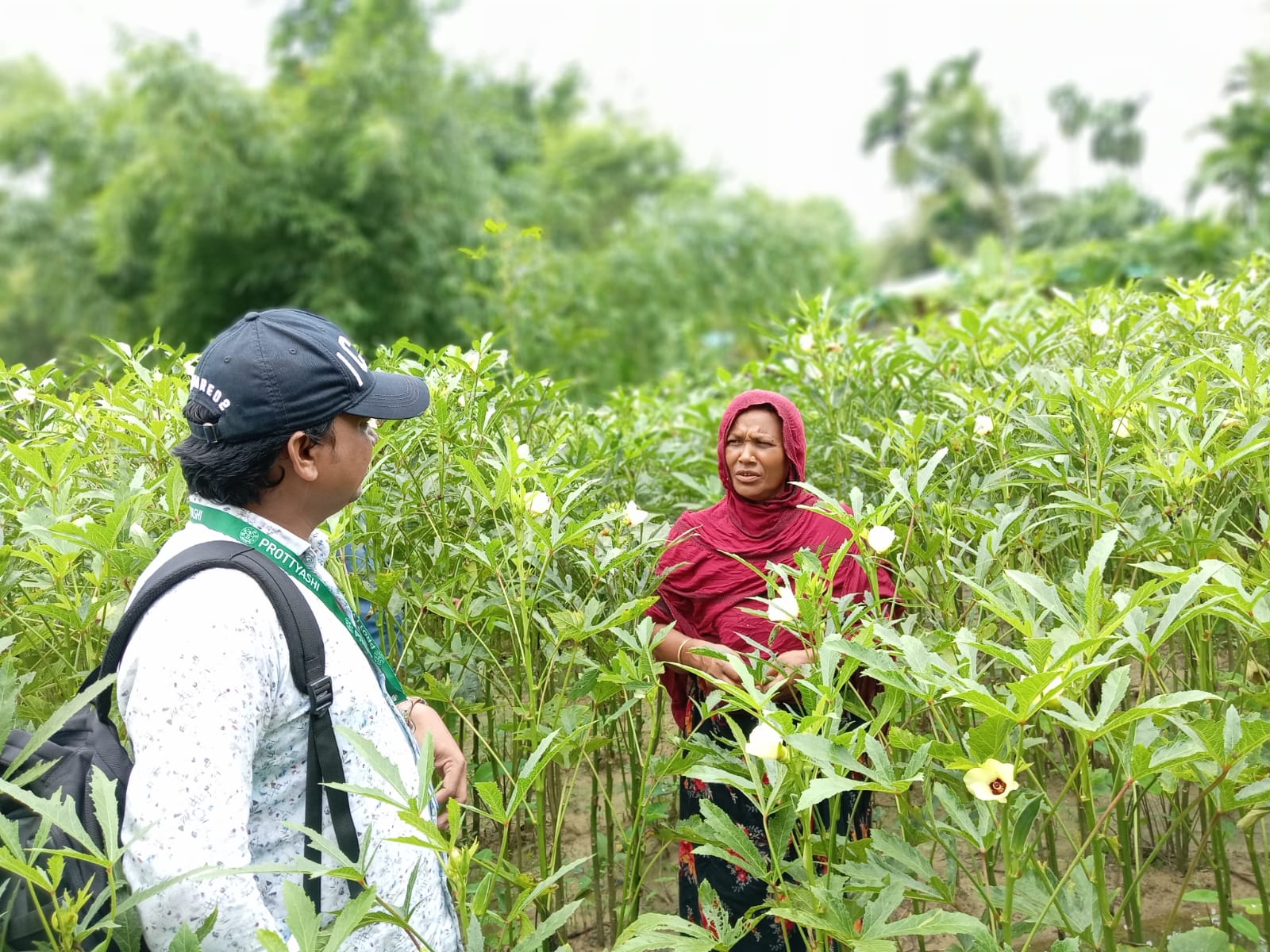
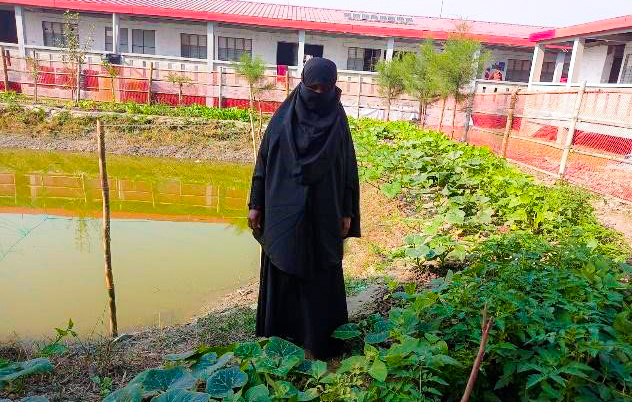
Although she did not receive input support like a shotoronji machine after the training, Shamsun smartly reserved her training incentive and invested BDT 2,000 into starting a small vegetable garden. She hopes to make a profit of at least BDT 4,000 from this initiative, which she sees as an extension of her self-reliance skills developed through the training. Her story illustrates how skill development can create multiple pathways to income generation.
Shamsun’s neighbors recognize her weaving skills and are interested in learning from her, especially since such training opportunities are limited in Bhasan Char. She dreams of one day teaching shotoronji weaving to her children and others in her community. However, to truly expand her income and share her skills, she needs proper input support—especially a shotoronji weaving machine. With that support, she believes she can make more rugs, earn more income, and improve her family’s future.
Looking ahead, Shamsun envisions returning to Myanmar one day, taking her skills and tools with her to start a small business. She believes that her knowledge of traditional crafts like shotoronji will be the foundation of a stable and dignified life for her and her children.
Shamsun’s story is a powerful example of how training, determination, and a small opportunity can change a woman’s role from a dependent to a provider, leader, and future trainer in her community.