







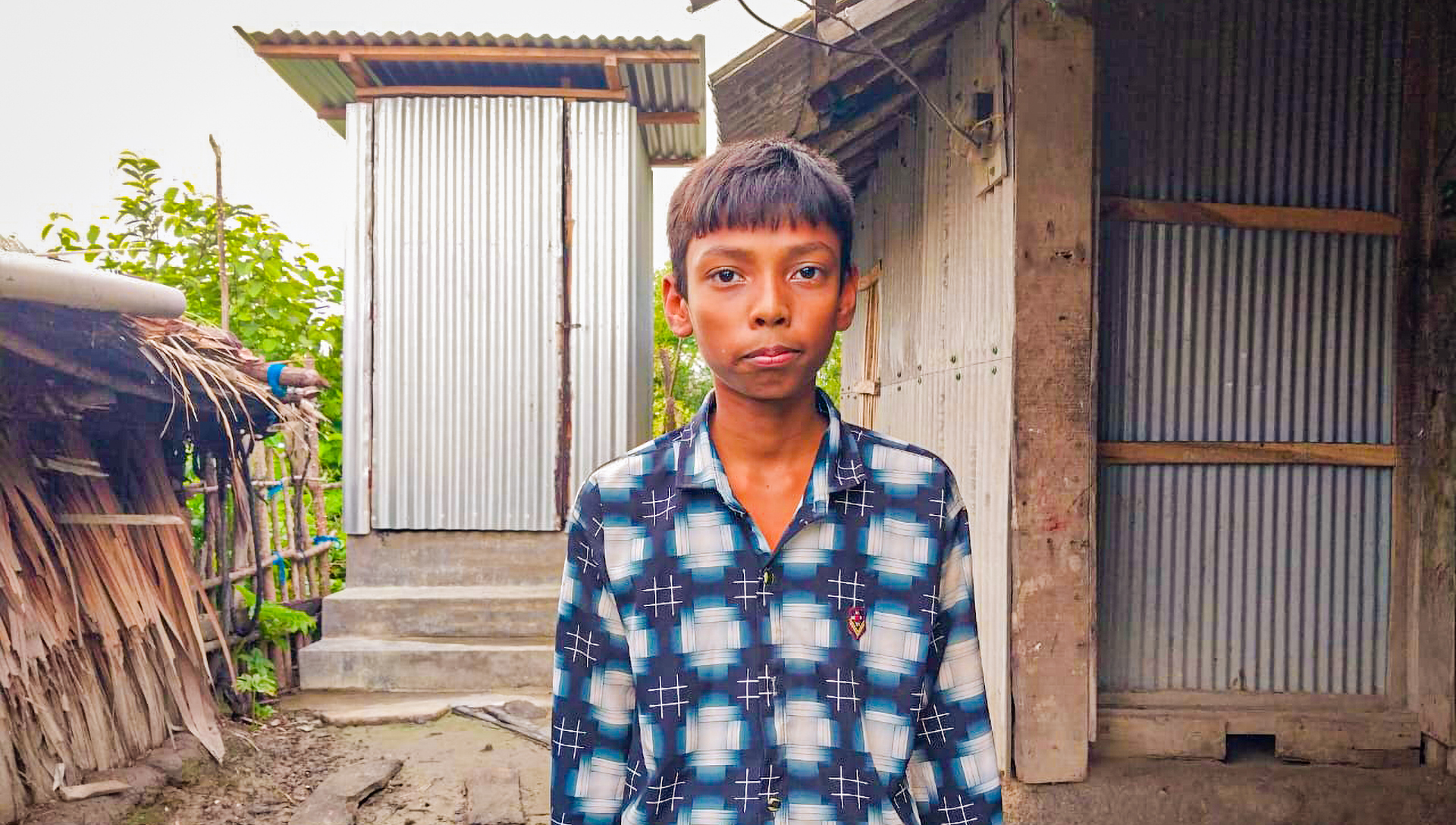
Due to its geographical location and adverse environment, Bangladesh is known as a very disaster-prone country in the world. Every year various disasters cause huge damage to human resources, water and sanitation services. Which puts them in dire straits by disrupting their normal life journey. Water and sanitation infrastructure is one of the infrastructures that are damaged due to disasters. And with the aim of reducing the suffering and improving the quality of life in order to deal with the uncertainty caused by climate change, the WJR WASH project is being implemented from December 1st, 2023, in Koira Upazila with the overall cooperation of Bangladesh and the implementation of the PROTTYASHI NGO with the funding partner of World Jewish Relief being implemented. Sabuj Hossain is a beneficiary of Maharajpur Ward No. 3 Mathbari Village in his continuation. Sabuj Hossain, who grew up in a poor uncle’s family, is now 14 years old. Sobus Hossain studies in class six. When he was in his mother’s womb, his father married another woman and moved there. Stop looking after them. Sabuj’s mother, Mumtaz Begum, is 35 years old. Sabuj spent his childhood in the family of his mother and uncle. At the age of 8, his mother was also married elsewhere. Neglect continues to live a carefree life of Sobuj.
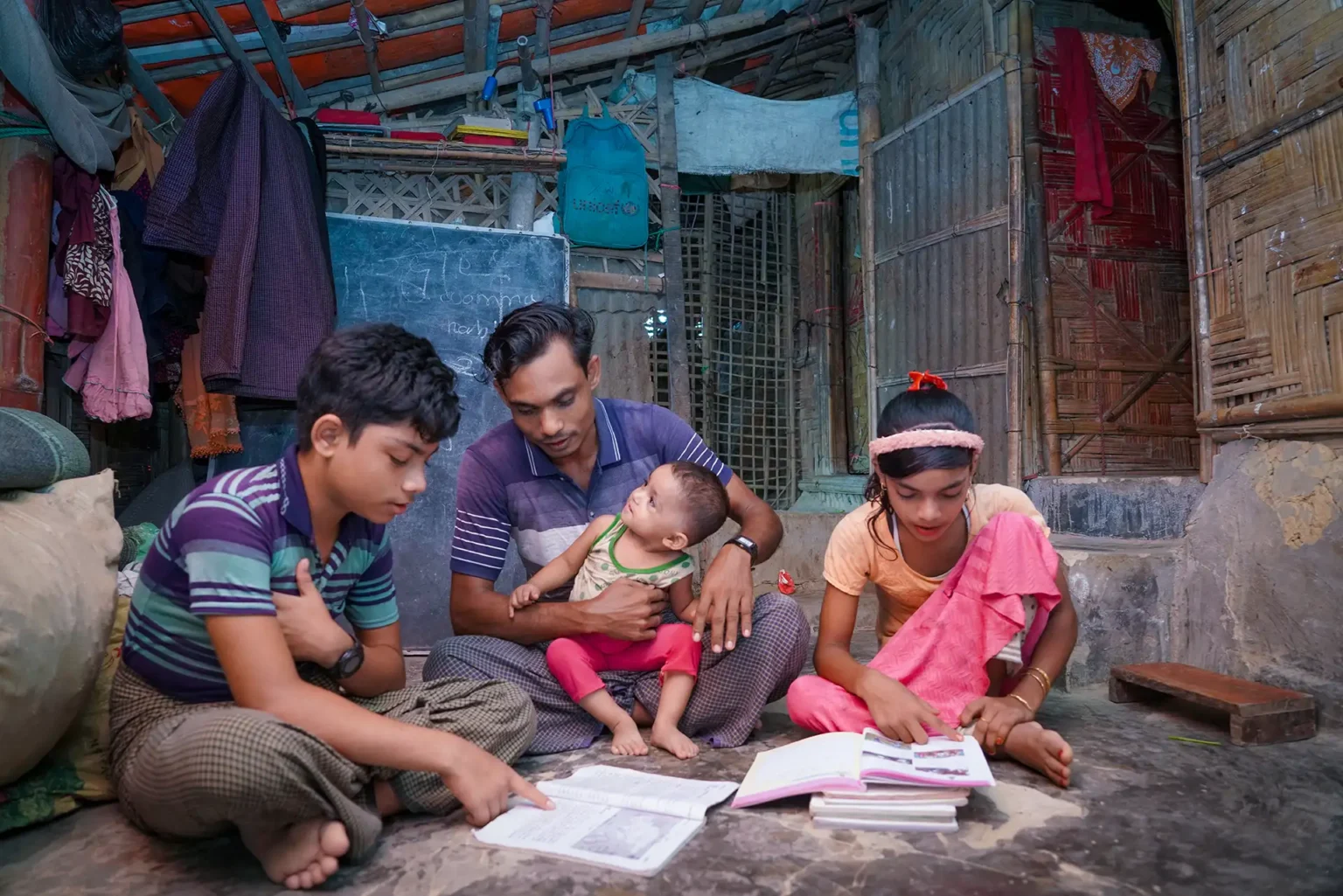
Poor Uncle Hafizul Dhali is 37 years old. There are 6 people in his family, including his pregnant mother. Wife Roshanara Khatun, 33 years old, is a housewife by profession. Life has to be spent very hard with a disabled daughter. Her name is Sadia Khatun, age 10 years, congenital disability, and little girl Mim Aktar is age 4 years. Hafizul’s mother, Tahmina Khatun, is 60 years old. Hafizul’s profession is to extract crabs and shrimps. Monthly income: 5000/7000 thousand. He has to struggle to run the family with this little income. They live in the land along the river. Most of the year they have to depend on rivers and forests. Hafizul has a family of 6 people living on a single income.
Sabuj Hossain, before receiving the MHM sessions provided by the project, did not know about puberty changes, the effects of salinity, AIDS, child marriage, the risk of adolescence, etc., and his sanitation system was very poor. All the family used to urinate in the open place by tying wood on the riverbank. As a result, families were often exposed to waterborne diseases and had very little health awareness.
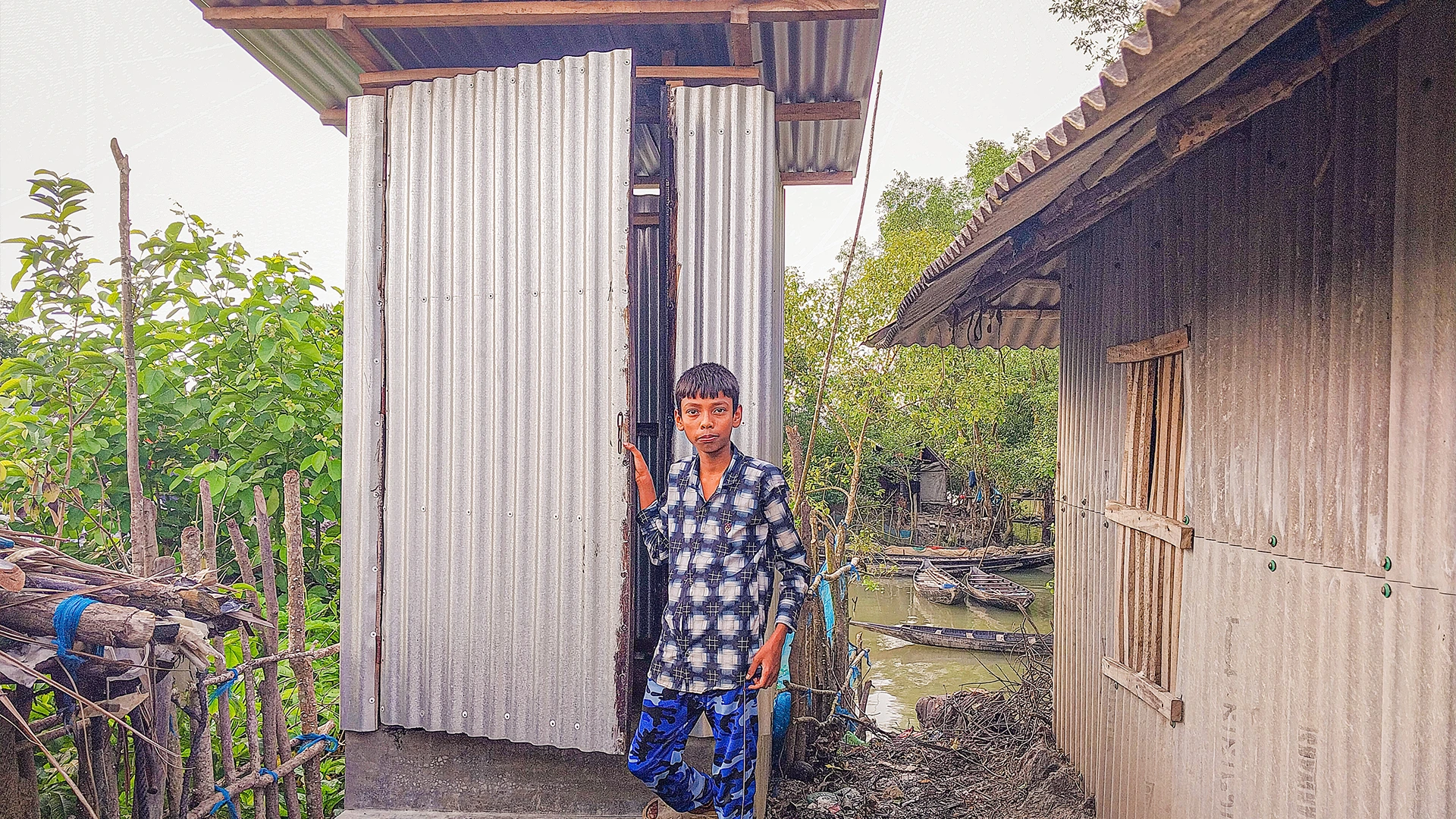
Hafizul Dhali suddenly came to know through his nephew Sabuj that Ward No. 3 of Maharajpur Union Mathbarigram has formed a team of 25 boys and girls in a project called the WJR-WASH project. They will also work on the concept of adolescent health as well as safe water and hygienic latrines. In the meantime, the work of toilets has started through the WJR WASH project. On the basis of the information previously given by Sobuj, I visited his house on the ground and verified the information given by him. The information given by him is correct, the name is determined, and in coordination with the ward’s Mohammad Abu Saeed Molla and Chairman of the Union Parishad, Mr Abdullah Al Mahmud, the family has been placed in a sanitary toilet. As a result, family members are using sanitary latrines instead of open defecation. Family members don’t get sick again and again like before. There is no environmental pollution. Family health awareness has increased. Others are inspired to create these hygienic closets.
Sabuj Hossain said, “Through PROTTASHI NGO, I got good knowledge about health and can use sanitary toilets. This work in our area has been going on for a long time, and we wish that everyone would be healthy and beautiful by using sanitary toilets. I am wishing long success to PROTTYASHI.”