








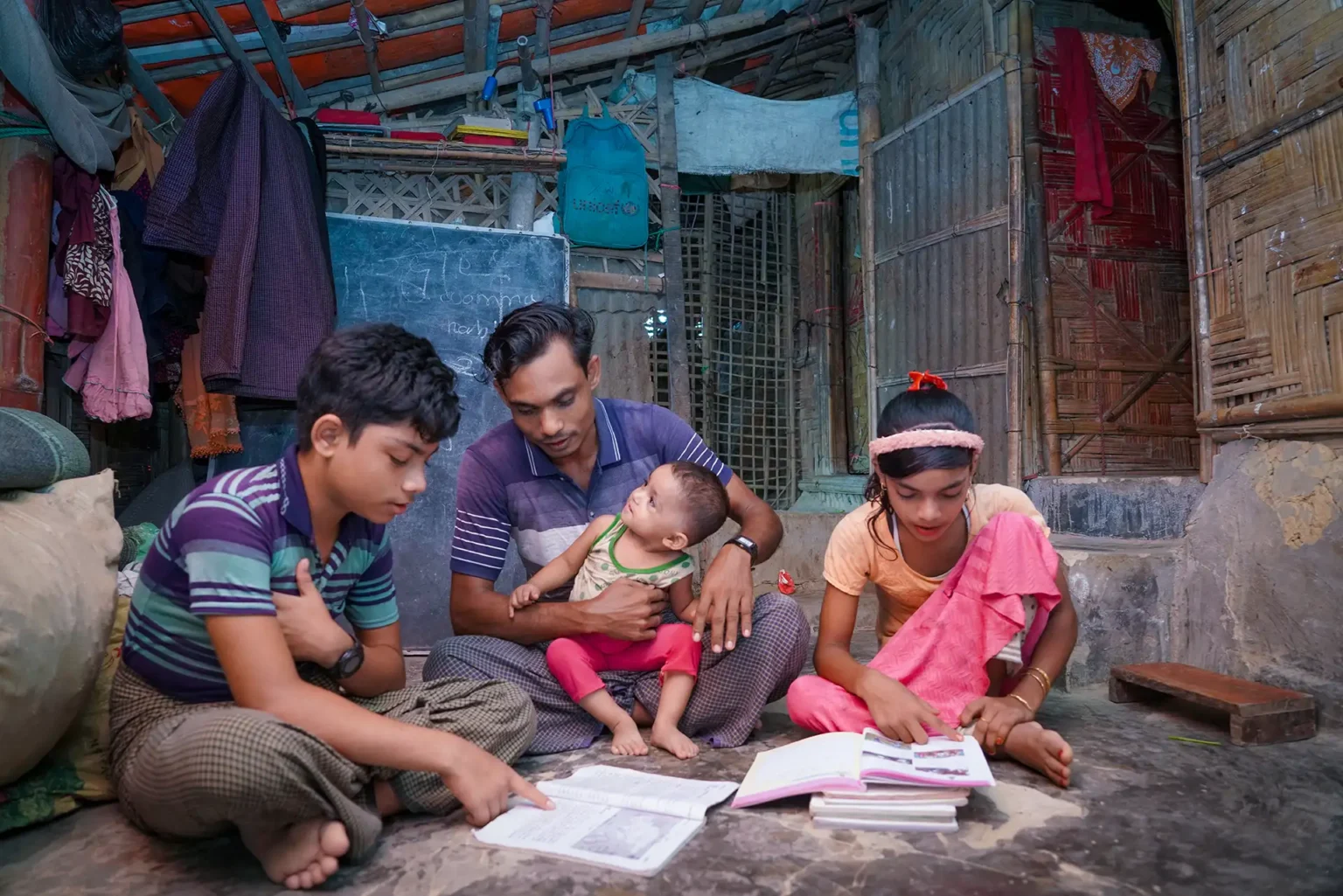
Farida Begum, a resilient woman from a remote village in Bangladesh, lived a life marked by financial struggle and uncertainty. Her family, consisting of her husband, two sons, and two daughters, relied entirely on subsistence agriculture. With limited land and traditional farming knowledge, their harvests barely sufficed to meet the household’s basic needs. Month after month, Farida grappled with the burden of rising living costs, limited opportunities, and the constant worry of not being able to provide nutritious meals for her children.
For years, Farida accepted this cycle of hardship as her reality. But things began to change when she became a member of the Probal Samiti under the UPP-Ujjibito project implemented by PROTTYASHI. Through the project’s initiative, Farida came in contact with development workers who introduced her to new possibilities in agriculture—particularly the potential of commercial vegetable farming.
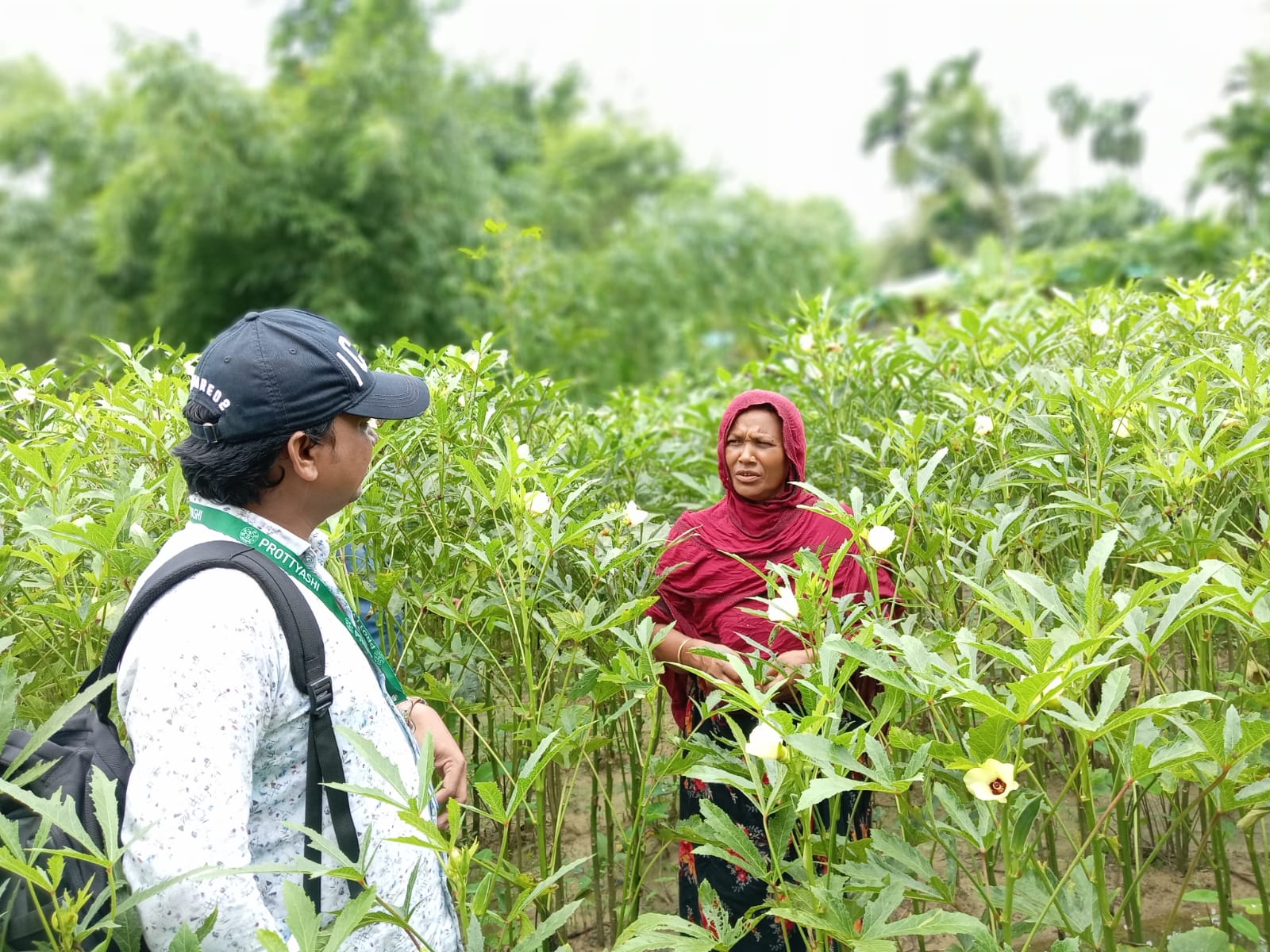
Farida had never considered vegetable cultivation as a viable income-generating activity. She was unaware that, compared to traditional crops, vegetables could yield a faster return and better profit, while also contributing to household nutrition. Under the guidance of the project staff, she received seeds for four different vegetables suitable for the Rabi and Kharif-2 seasons, along with technical training and follow-up support on land preparation, crop rotation, pest control, and organic fertilizer use.
Encouraged by this new knowledge and support, Farida began cultivating vegetables in a small section of her family’s land. She applied the techniques she had learned from the training and worked diligently to nurture her crops. The first harvest brought her not only fresh produce for the family’s meals but also surplus vegetables to sell in the local market.
Seeing the tangible benefits, Farida gradually expanded her vegetable plot. Over time, she transformed her household’s agricultural practices from subsistence farming to commercial vegetable production. Today, she earns an average of 8,000 to 10,000 Bangladeshi Taka per month, which has significantly improved her family’s standard of living.
Farida’s success is not just measured in income. With her newfound earnings, she ensures her children are well-fed, go to school regularly, and receive medical care when needed. She has gained respect in her community as an example of how women can lead change through perseverance and the right support. She now dreams of saving enough to buy more land and help other women in her village follow a similar path to self-reliance.
Farida Begum’s journey exemplifies how targeted interventions, skills training, and access to resources can empower rural women to transform their lives and communities. Her story is a testament to the impact of the UPP-Ujjibito project in promoting sustainable livelihoods and gender-inclusive development.
