








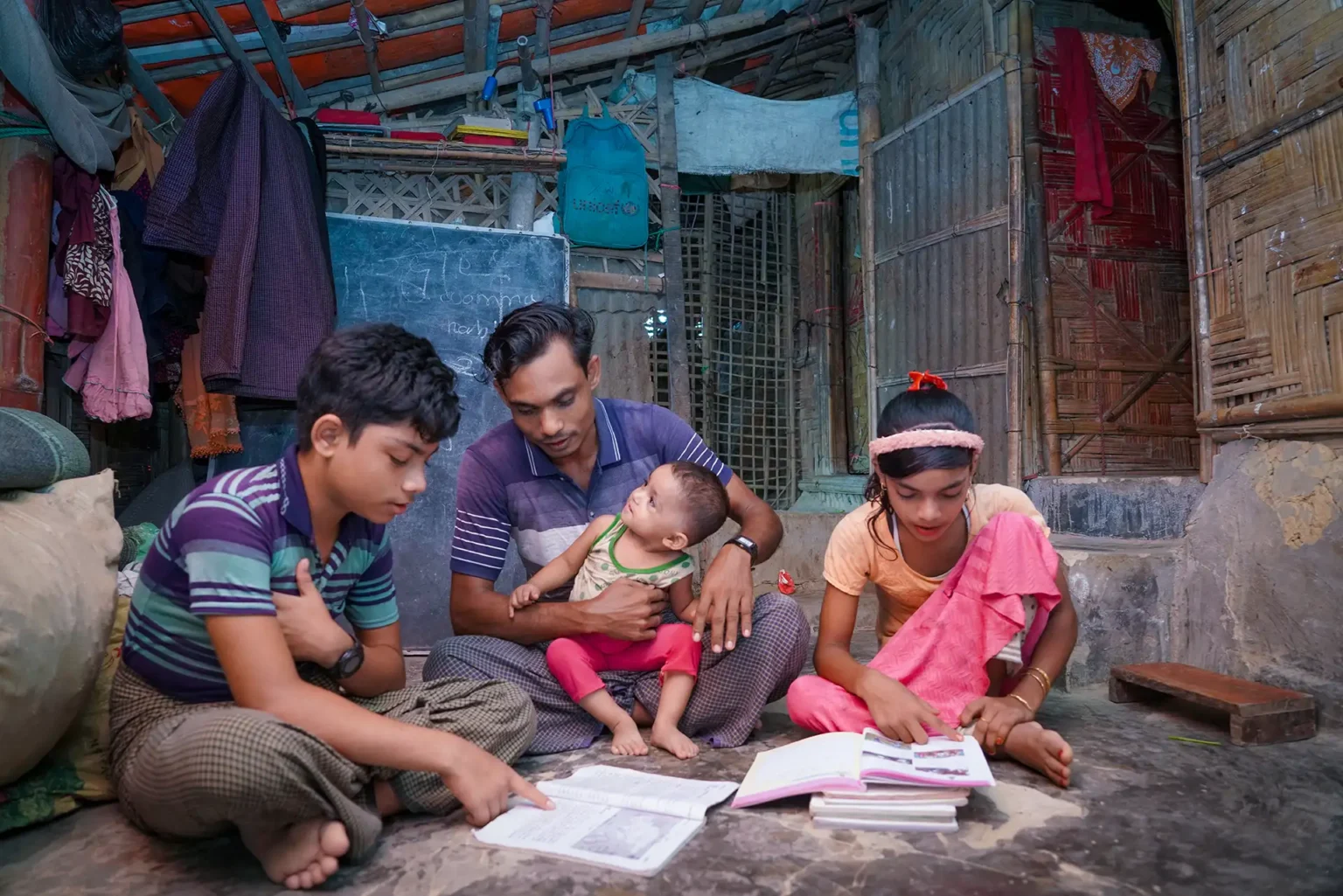
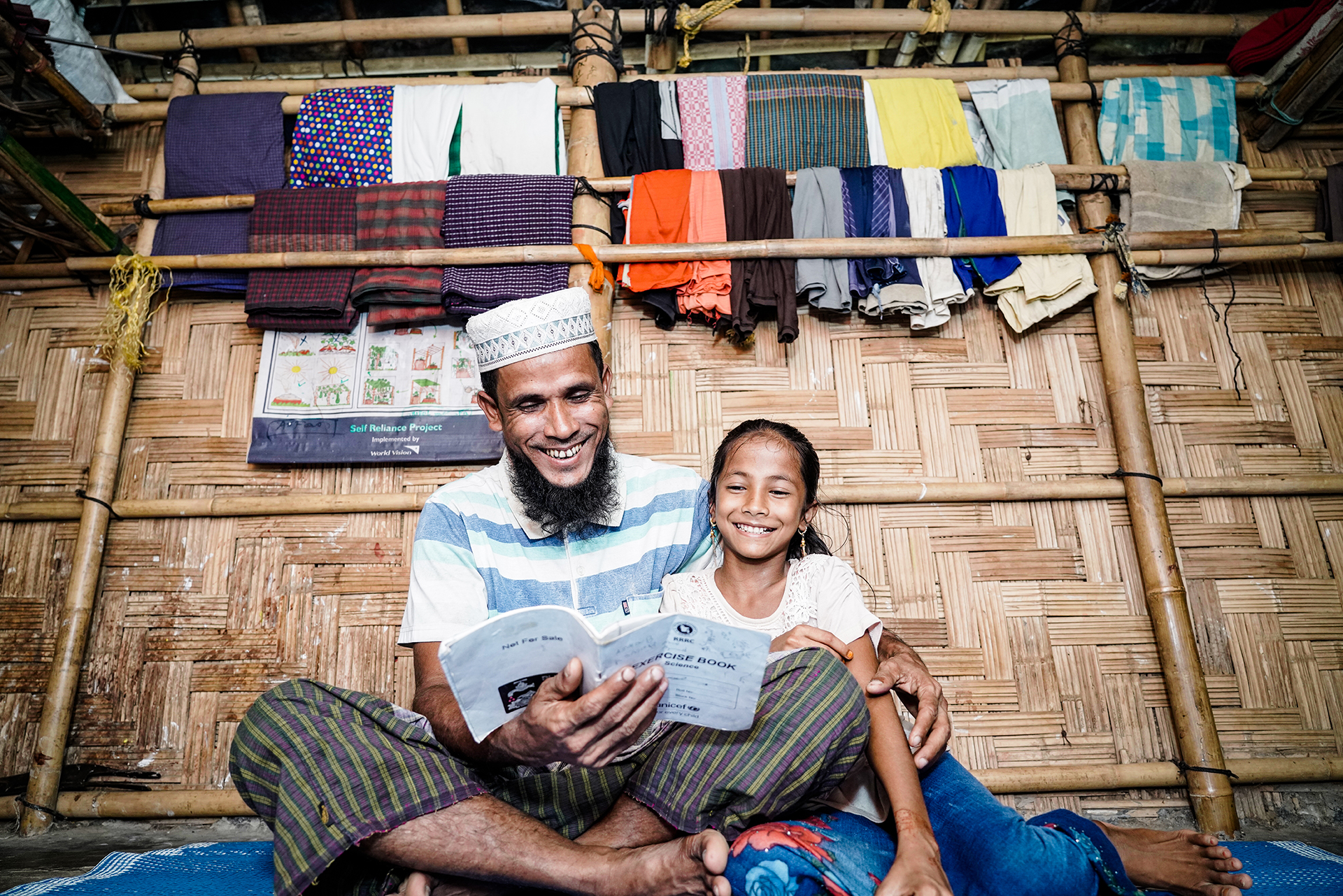
Escaping the perils of Myanmar in August 2017, Hossain Ahmed 46 years old, a Rohingya refugee, found residence in Bangladesh along with his family. They settled in the Rohingya Refugee Camp-15, B-9 Sub Block, Ukhiya, Cox’s Bazar. His role as a camp cleaner barely helped him provide for his large family, consisting of four sons and five daughters.
Back in Myanmar, Hossain’s conservative views resulted in deep-seated gender bias against his daughters. He denied them basic rights and needs, including education, nutrition, and clothing, a practice rooted in societal norms marginalizing female children.
His disenchantment intensified with the birth of each daughter, compelling him to give some away for adoption. Arriving at the refugee camp in dire financial circumstances, Hossain made the difficult decision to send one of his daughters to work as a maid. His life took a dramatic turn in the refugee camp when Hossain encountered staff from the “Delivering Health, Nutrition and Livelihood, and Protection Services to Rohingya Refugees and Vulnerable Host Communities in Cox’s Bazar, Bangladesh” project. Motivated by the program’s vision, Hossain and one of his daughters joined, with Hossain committing to attend all 14 sessions. These sessions enlightened Hossain about the equal rights of boys and girls and the adverse impact of denying these rights. This pivotal understanding made him recognize the significance of reproductive health and puberty for girls, and he began providing essential sanitary supplies for his daughters.
Transformed, now I cherish my daughters as blessings rather than burdens. Ensuring equal opportunities for all my children, I pledge to prevent child marriages and prioritize my daughters’ education and skill development.
Hossain Ahmed Belive ‘’ Every girl is born with equal rights and understood the physical and emotional harm caused by denying those rights’’
As days end, Hossain reflects on his remarkable journey with gratitude, acknowledging Prottyashi’s life-changing sessions. His transformation from a gender-biased man to a loving, supportive father symbolizes the influential power of Prottyashi interventions, becoming a beacon of hope and inspiration for many.
